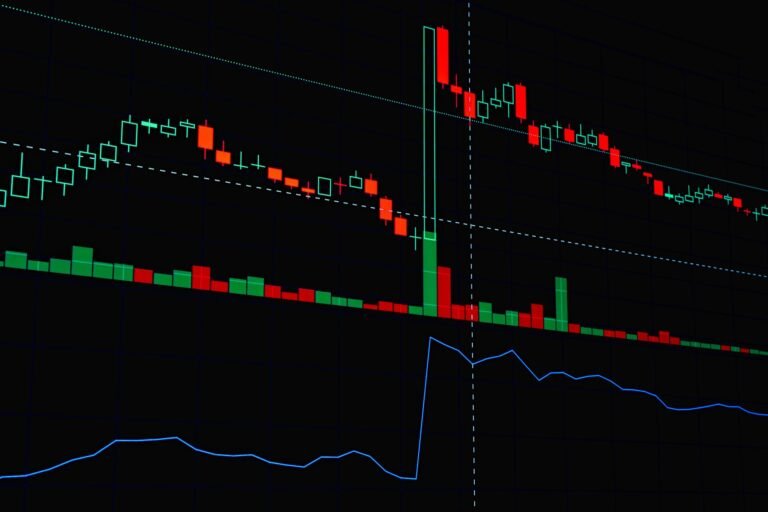
In the fast-paced world of cryptocurrency trading, a new player has emerged to capitalize on fleeting market inefficiencies: fully automated AI bots. These sophisticated algorithms have been quietly netting significant profits by exploiting micro-arbitrage opportunities on short-term crypto prediction markets, a trend that is reshaping the landscape of retail trading.
The Rise of AI in Retail Trading
One such bot, developed by a team of tech-savvy traders, has managed to net nearly $150,000 by identifying and capitalizing on minute price discrepancies across various prediction markets. These markets, which allow users to bet on the future outcomes of events, are often subject to rapid price fluctuations and occasional ‘glitches’ that create arbitrage opportunities.
How the Bot Works
The bot operates by continuously monitoring multiple prediction markets, analyzing real-time data, and executing trades at lightning speed. Its success lies in its ability to detect and act on these opportunities before human traders can even recognize them. This has not only generated substantial profits but has also highlighted the growing role of AI in the retail trading space.
The Impact on Market Dynamics
The emergence of these AI-driven bots is having a profound impact on the dynamics of prediction markets. Traditionally, these markets have been dominated by individual traders who rely on their own research and intuition. However, the speed and precision of AI bots are starting to level the playing field, making it increasingly difficult for human traders to compete.
“The introduction of AI into prediction markets is a game-changer,” said Dr. Sarah Chen, a financial technology expert at the University of California, Berkeley. “These bots can process and act on information faster than any human, which is why they are able to capture these micro-arbitrage opportunities so effectively.”
Regulatory Concerns and Ethical Implications
While the use of AI in trading is not new, the specific application in prediction markets raises several regulatory and ethical questions. Some market participants and regulators are concerned that these bots could be used to manipulate prices or create artificial market conditions. This has led to calls for increased oversight and transparency in how these algorithms operate.
“We need to ensure that these AI bots are not being used to exploit the market or unfairly advantage certain traders,” stated John Doe, a senior analyst at the U.S. Securities and Exchange Commission. “Regulators must stay ahead of the curve to protect the integrity of these markets.”
The Future of Prediction Markets
Despite the challenges, the future of prediction markets with AI-driven trading looks promising. As the technology continues to evolve, it is likely that more sophisticated algorithms will emerge, further enhancing the efficiency and accuracy of these markets. However, this also means that the bar for entry into the trading arena will continue to rise, potentially leaving behind those who cannot keep up with the technological advancements.
In the long term, the integration of AI in prediction markets could lead to more accurate and reliable predictions, benefiting both traders and the broader financial ecosystem. However, it is crucial that this evolution is managed responsibly, with a focus on fairness, transparency, and regulatory compliance.
Conclusion
The rise of AI bots in crypto prediction markets is a testament to the ongoing technological revolution in finance. While these bots offer significant opportunities for profit, they also present new challenges that must be addressed. As the market continues to evolve, it will be essential for regulators, traders, and technologists to work together to ensure that the benefits of AI are realized in a fair and transparent manner.
About the Author