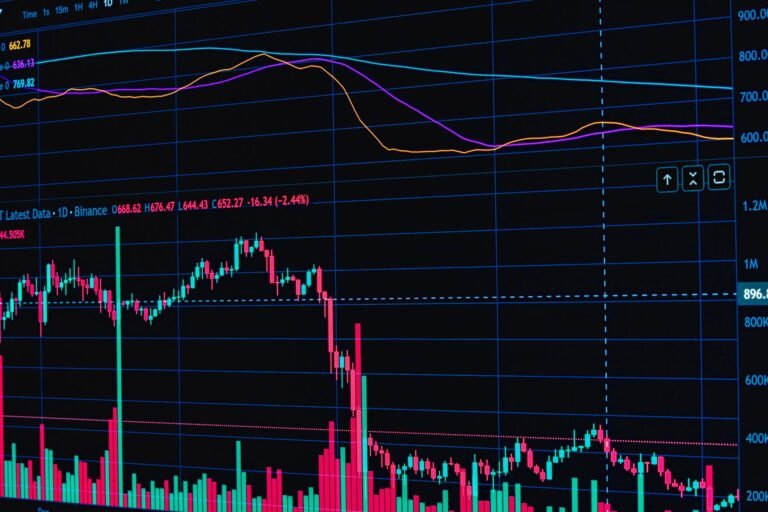
Ethereum’s (ETH) value took a nosedive below $1,900 during Asian trading hours on Tuesday, marking a significant 38% decline over the past 30 days. The sharp drop has been fueled by a combination of market sentiment and technical indicators that suggest the cryptocurrency may not have hit rock bottom just yet.
Bearish Indicators Abound
One of the most telling signs of the current bearish trend is that Ethereum’s price has fallen below its realized price, a critical on-chain metric that recalculates the market value based on the last transaction price. This situation has historically signaled the continuation of bearish phases, as it indicates that a significant portion of holders are now underwater.
Ethereum’s current market price of $1,830 is notably below the average cost basis of $2,380, a historically bearish sign. When the realized price is above the spot price, it often acts as resistance, making it more likely for panic selling to occur, especially in the current climate of uncertainty and fear driven by external factors like tariffs.
Historical Patterns and Market Charts
Historical data suggests that Ethereum may not find a stable bottom until the 50-week moving average (MA) crosses below the 100-week MA. This type of cross has historically marked the end of major bear markets, including in 2022 and 2018. Currently, the 50-week MA is at $3,017, just above the 100-week MA at $2,920, indicating that further declines are likely before any significant recovery.
Traders are also noting a bear flag pattern on the daily price chart, which has formed after key support levels were breached. According to trader BitBull, the final target for this bear flag is in the $1,400-$1,500 range. Some analysts predict that the ETH/USD pair could drop as low as $1,100, driven by declining network activity and waning institutional demand.
US Market Sentiment and ETF Outflows
The Ethereum Coinbase Premium Index, which tracks the price difference between ETH on Coinbase and Binance, has dropped to a 3.5-year low, suggesting that much of the selling pressure is coming from the US, particularly from retail traders. The last time the 30-day simple moving average (SMA) was this negative was during the depths of the 2022 bear market.
Institutional demand has also seen a sharp decline, with US-based spot Ethereum ETFs recording outflows for five consecutive weeks, the longest streak since April 2025. Investors have withdrawn nearly $1.3 billion from these investment products over this period, with $123 million exiting the funds last week alone. These outflows add to the downward pressure on Ethereum’s price.
Looking Ahead
The current market conditions and technical indicators point to a continued bearish trend for Ethereum. While the cryptocurrency has faced significant headwinds, it’s important to note that bear markets can present opportunities for long-term investors who are willing to weather the storm. However, for the time being, the path of least resistance for Ethereum appears to be downward, and traders and investors should remain cautious.
About the Author