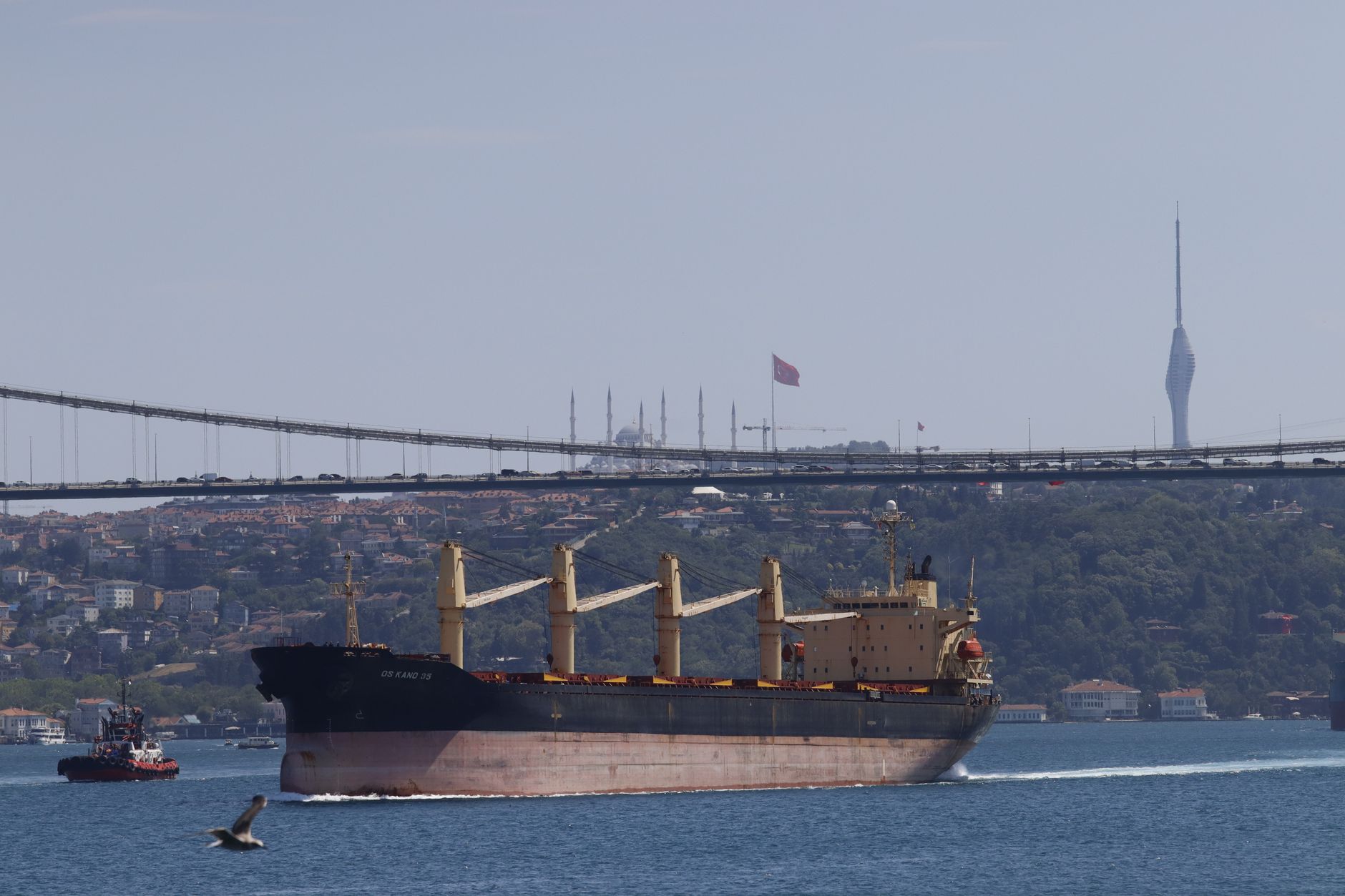
Iran Moves to Close the Strait of Hormuz as Tensions Erupt Over Broken Ceasefire Deal
The measure, announced by the Khatam al-Anbiya Central Headquarters, was taken in response to violations by the U.S. government of the memorandum of understanding signed to end the war. Nonetheless, reports indicate that no ground moves have been made to this end.


Key Takeaways
- Iran threatened to close the Strait of Hormuz, risking renewed oil market stability after an IDF blitz.
- CENTCOM countered on June 20, reporting 55 ships moved 17M barrels to stabilize oil prices.
- Oil dropped to $77, and Bitcoin topped $66K after the ceasefire, but a Strait closure would hit risk assets.
Iran Announced Closure of the Strait of Hormuz After Lebanon Strikes
The Iranian regime is taking action against what it qualifies as a breach of the previously signed memorandum of understanding to end the current conflict in the Middle East.
Local reports indicate that Iran’s Khatam al-Anbiya Central Headquarters, the operational headquarters of the Iranian military, announced that it would close the Strait of Hormuz, a strategic passage for 20% of the world’s oil, as a retaliatory measure after the U.S. failed to comply with the first clause of the memorandum of understanding (MoU) signed by President Donald Trump and Iranian President Masoud Pezeshkian.
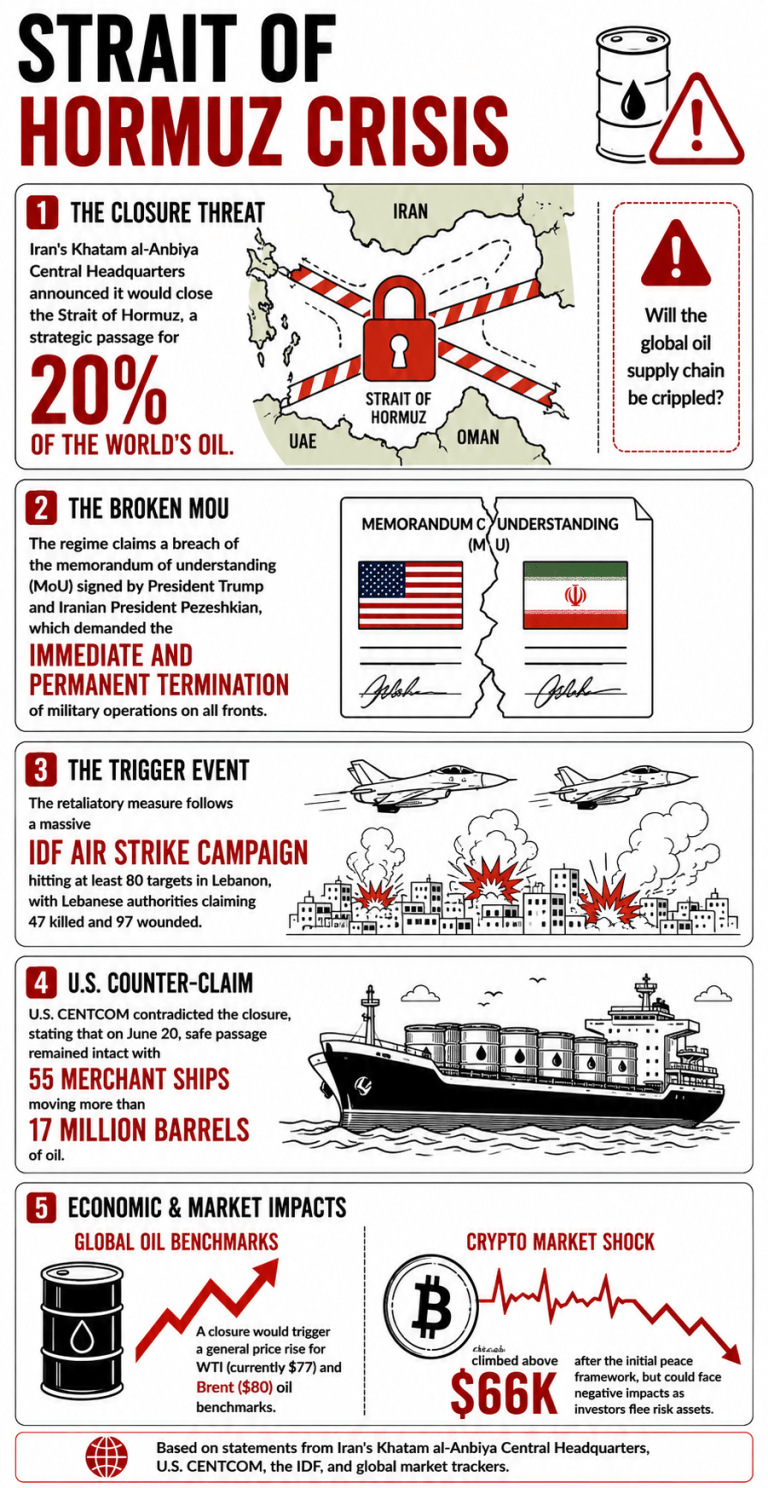
The first clause of the document stresses that “the United States of America and the Islamic Republic of Iran and their allies in the current war, by signing this MOU, declare the immediate and permanent termination of military operations on all fronts, including in Lebanon, and undertake from now on not to initiate any war or any military operation against each other.”
The measure comes as the Israel Defense Forces (IDF) launches a massive air strike campaign against objectives in Lebanon, hitting at least 80 targets allegedly linked to Hezbollah, and killing dozens of its members. Nonetheless, Lebanese authorities claim that over 47 people were killed and 97 people were wounded during these strikes.
U.S. Central Command (CENTCOM) issued a statement contradicting the Iranian regime, stressing that commercial ship traffic “increased June 20 as U.S. forces continued operating in the general area to support freedom of navigation.” “Safe passage through the international waterway remained intact today as 55 merchant ships transited, moving large amounts of cargo and more than 17 million barrels of oil to global markets,” it stressed.
A new closure of the Strait would result in a general rise in prices of the West Texas Intermediate (WTI) and Brent oil benchmarks, which have fallen to $77 and $80, respectively, in response to actions taken to end the U.S.-Israel-Iran conflict.
The action could negatively affect crypto markets, as Bitcoin climbed above $66K immediately after the announcement of a framework to end the war, with market actors jumping to risk assets.



About the Author