
Treasury Secretary Bessent Says CLARITY Act Is at the ‘1-Yard Line’
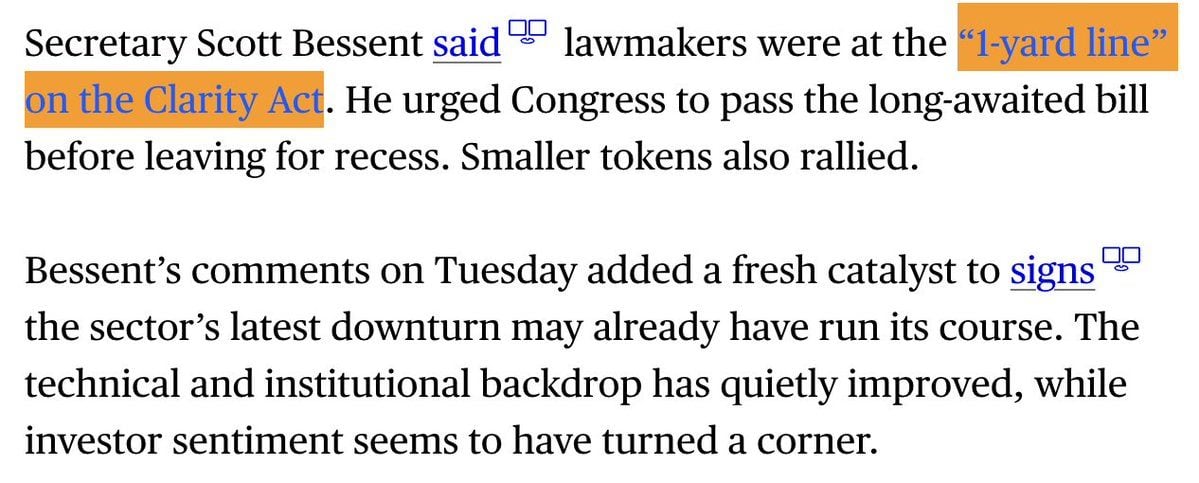
Scott Bessent has said that the CLARITY Act is at the “1-yard line” and urged Congress to pass it before recess, even as Senator Kirsten Gillibrand faces backlash from progressive groups over her role brokering the bill’s ethics provisions.


Key Takeaways
- Treasury Secretary Scott Bessent said July 21 the CLARITY Act has reached the “1-yard line.”
- Bitcoin rose toward $67,000 and Coinbase shares jumped 13% after Bessent’s comments.
- Indivisible, Demand Progress, and the Revolving Door Project are pressuring Gillibrand over ethics terms.
A Bill ‘Almost There’
Bessent told Bloomberg that the digital asset market structure bill, formally the CLARITY Act, is nearly finished after months of negotiation, calling it a “1-yard line” situation for Congress. The comments came the same week Senate Banking Committee member Kevin Cramer told Fox Business lawmakers are “almost there,” adding that the bill grows “clearer” as “each issue gets dealt with.”
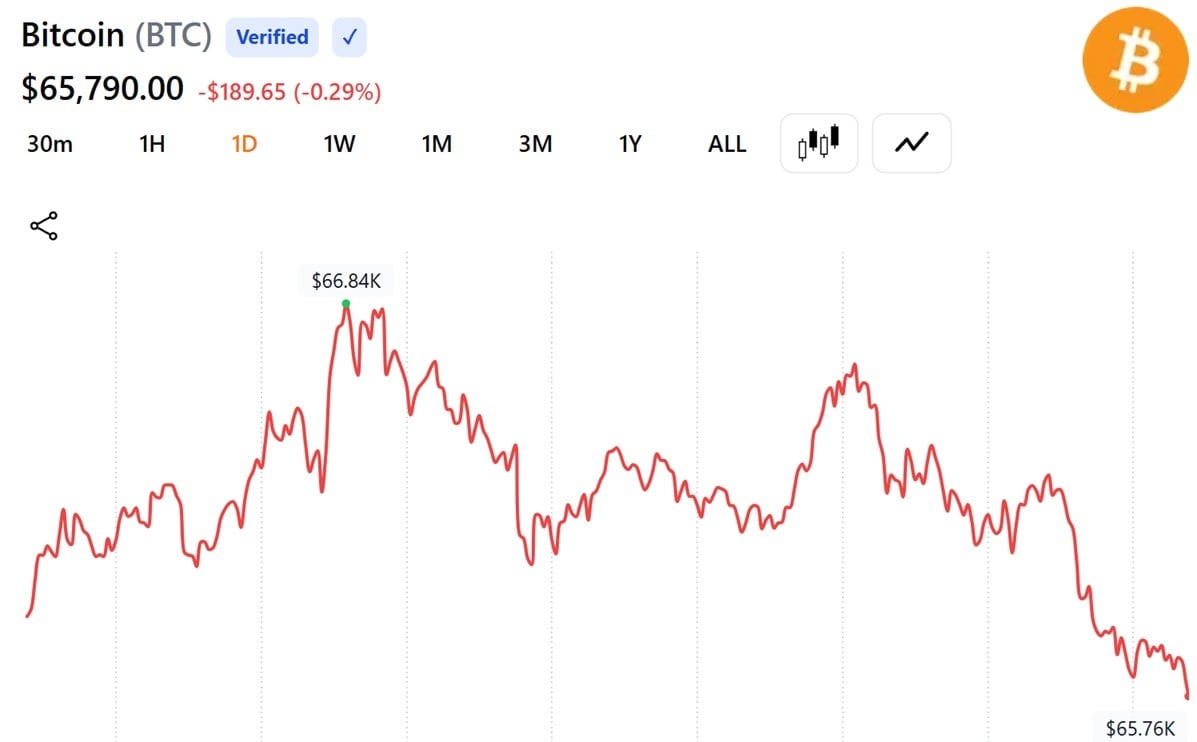
Markets reacted immediately with bitcoin rising about 2.5% toward $67,000 before retreating to $66,000. Moreover, shares of Coinbase Global jumped as much as 13%, a sign investors are pricing in regulatory clarity as a near-term catalyst rather than a distant possibility.
The math behind passage remains tight as the CLARITY Act needs 60 votes to clear the Senate, and Republicans hold only 53 seats, meaning at least seven Democrats must cross over for the bill to advance. Senate Majority Leader John Thune is aiming to bring the bill to the floor before the chamber’s August recess, with Cramer estimating the Senate has “a couple more weeks” before the break begins.
The Ethics Provision Snag
The remaining sticking point centers on ethics language added to satisfy Democratic holdouts. The White House reportedly reached an agreement on ethics-package terms during the week of July 20 and sent draft language to select Senate Republicans, but Democrats say they were shut out of those talks and have not yet seen the text themselves, according to reporting on the negotiations.
Bitcoin.com News has tracked the CLARITY Act’s path from a 15-9 committee vote through a period where the bill appeared stuck in the Senate, and the ethics language is now the last major obstacle standing between committee approval and a floor vote.
Senator Kirsten Gillibrand, who chairs the Democratic Senatorial Campaign Committee, has taken the lead in brokering those ethics terms, and that role is drawing sharp criticism from her own party’s left flank. Three progressive groups, Indivisible, Demand Progress, and the Revolving Door Project, sent a letter to every Democratic Senate office attacking her involvement. The letter argued:
“Senator Kirsten Gillibrand, chair of the Democratic Senatorial Campaign Committee (DSCC), is a prime example of a Democratic leader whose conduct undermines efforts to hold the Trump administration accountable for their rampant corruption.”
The groups added that “criticisms of the Trump administration’s overwhelming corruption fall flat when voters perceive the critics to be engaged in substantively similar behavior,” tying Gillibrand’s dealmaking on crypto ethics rules to broader complaints about her fundraising ties to the industry.
Gillibrand has defended her approach by pointing to a specific provision she is pushing: a rule barring elected officials and their spouses from issuing or sponsoring their own digital assets. “This is a commonsense requirement that should get broad bipartisan support,” she has said, adding that “public officials and their spouses should not be issuing memecoins.” That provision appears aimed squarely at preventing repeats of controversies involving politically connected token launches.
What Happens Before Recess
The disagreement over process, not substance, is what’s now slowing the bill down. Democrats broadly support some form of ethics restrictions on lawmaker crypto activity; the fight is over who wrote the language and whether it went through the normal bipartisan channel. With Thune targeting a floor vote before the August break and Cramer’s “couple more weeks” timeline lining up with that deadline, the bill’s fate will likely be decided in a compressed window.
It will now be interesting to see whether Thune can secure seven Democratic votes before the Senate leaves for the August recess.


Tags in this story
About the Author