


Bitcoin Held at a Loss Tops 2022 Bear Market Levels, Analyst Says
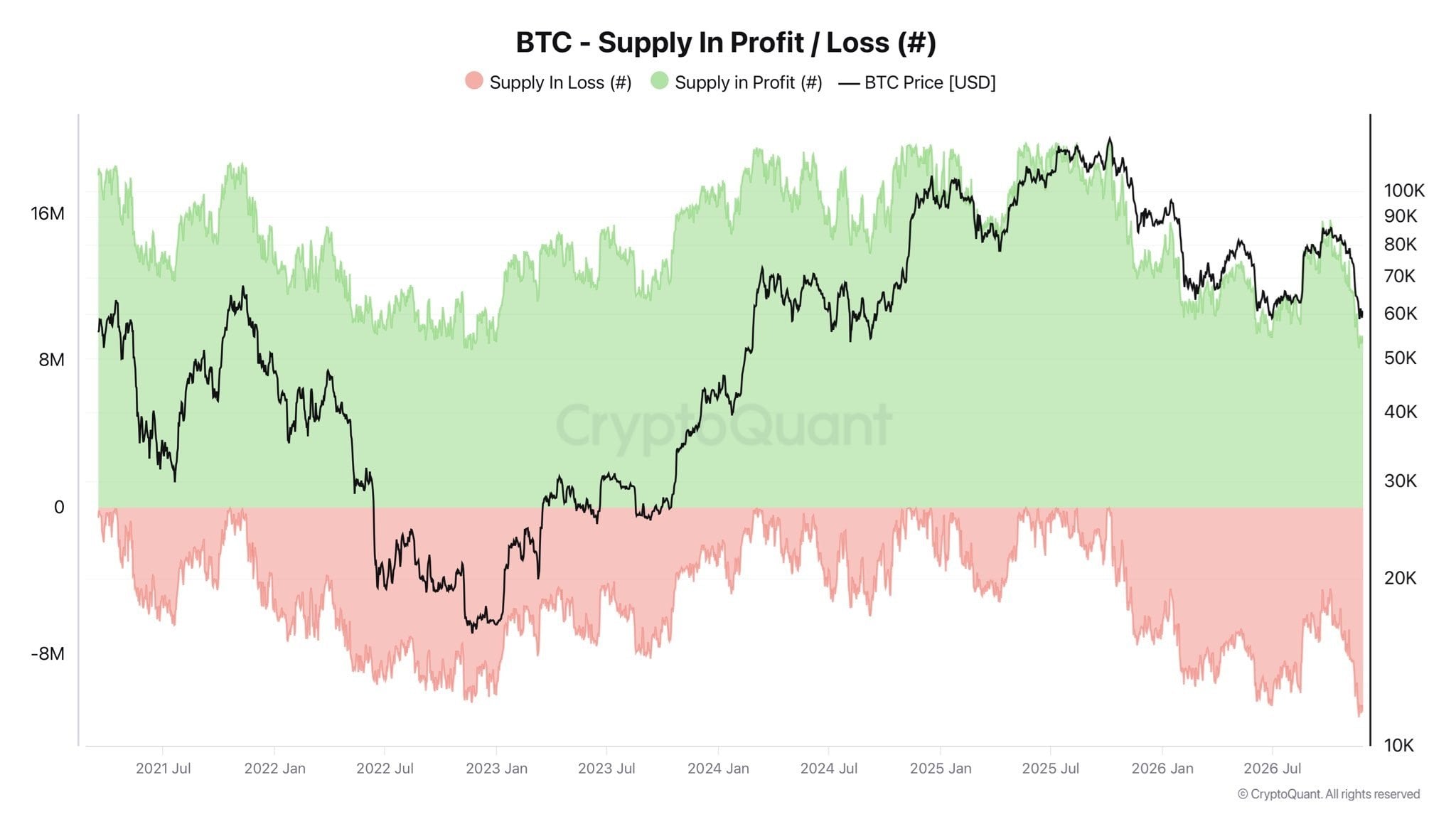
More than half of bitcoin’s measured supply was held at a paper loss, according to an analysis that included dormant and potentially lost coins. The 11.1 million coins underwater exceeded any level seen during the 2022 bear market.

Key Takeaways
- About 11.1 million bitcoin were held at a loss and 9 million were in profit.
- Coinglass recorded an earlier peak of 11.42 million BTC at a loss.
- Glassnode found the share of supply in profit fell from 54.2% to 47.3% in a week.
More Than Half of Bitcoin’s Supply Is Underwater
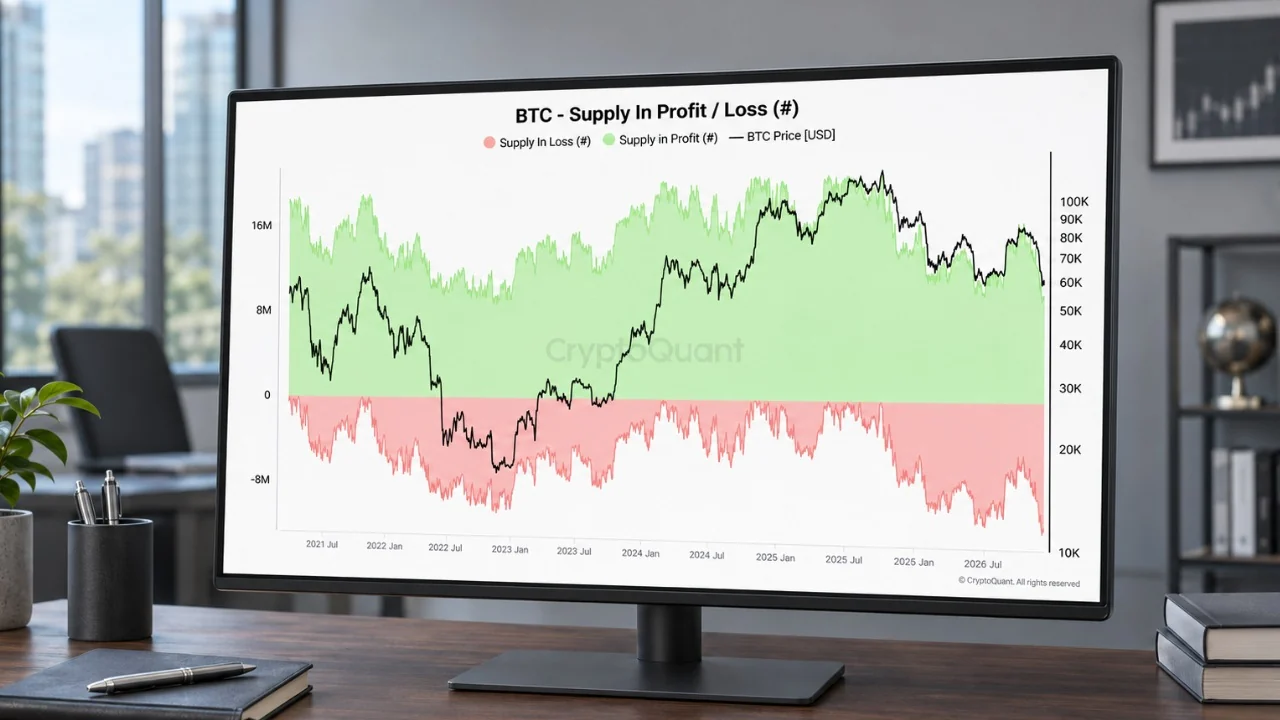
Cryptoquant contributor Darkfost said on Nov. 28 that the amount of bitcoin held at a loss reached 11.1 million coins, above the level seen during the 2022 bear market. The analysis included dormant and potentially lost coins. The figures put roughly 55% of the measured supply at a paper loss, regardless of how far each coin was below its reference price.
“We just hit a record for BTC held at a loss,” the analyst wrote on X, adding:
“Even during the 2022 bear market, there was never this much BTC underwater.”
“Currently, 11.1 million BTC are held at a loss, versus 9 million in profit,” the analyst further shared. He viewed the imbalance as a potential opportunity for investors looking to build a long-term bitcoin position.
During a reversal in bitcoin’s Thanksgiving rally on Nov. 27, bitcoin fell from an intraday high of $62,125 to $58,719 as roughly $7 billion in Deribit options expired. By midday, bitcoin had recovered to test $60,000. U.S. spot bitcoin ETF outflows for November had already surpassed $5 billion.
Coinglass Shows a Higher Reading Earlier in November
Coinglass’s historical figures for bitcoin held at a loss peaked at 11.42 million BTC on Nov. 20 before easing to 11.10 million on Nov. 27. The series stood at 6.66 million BTC 30 days before the Nov. 27 reading. The same series counted about 10.60 million BTC at a loss on Nov. 21, 2022.
Glassnode’s weekly bitcoin market analysis showed the share of supply in profit fell to 47.3% from 54.2% a week earlier. The Nov. 23 report also found that short-term holders’ net unrealized profit-to-loss reading had fallen to its lowest level since mid-June. Weekly ETF outflows were the heaviest since early July, while futures open interest fell to its lowest level since early March.
During the June sell-off below $61,000, Glassnode estimated that more than 8 million BTC were underwater on June 9. Bitcoin briefly fell to $60,718 that day before reclaiming $61,000. It later traded near $61,700, down 2.9% on the day. Its losses over the preceding week reached 8.5%.
How the Metric Counts Bitcoin at a Loss
Analysts compare the current market price with the price at which unspent bitcoin transaction outputs last moved. Coins count as underwater when their last-moved price is higher. A transfer between wallets can reset that reference price without a sale even when the same person still owns the coins. A price rebound can return coins to profit while they stay in the same wallets.
Cryptoquant contributor Cryptozeno estimated that the bitcoin supply profit-to-loss ratio was near 0.8, or about eight coins in profit for every 10 at a loss. The contributor pointed to similar readings near past market lows, including during the 2022 bear market, and said the seven- and 30-day averages needed to recover above 1 to confirm a durable improvement.
Realized price combines those individual reference prices into a single average for circulating bitcoin. Matt Mena, senior crypto research strategist at 21shares, put bitcoin’s average on-chain cost basis near $53,000 on Nov. 25. He warned that a sustained move below that level could bring $48,500 into play, pointing to the August 2024 sell-off, when bitcoin traded below $49,000.

Arthur Hayes said he was increasing crypto exposure ahead of Anthropic’s expected stock market debut next week. His near-term optimism…
Read Now: ‘Anthropic IPO Is Going to Rip’: Arthur Hayes Loads Up on Crypto Ahead of Debut


About the author
WRITTEN BYKevin Helms
Kevin Helms is a cryptocurrency journalist specializing in Bitcoin, blockchain regulation, and global digital asset markets.
About the Author