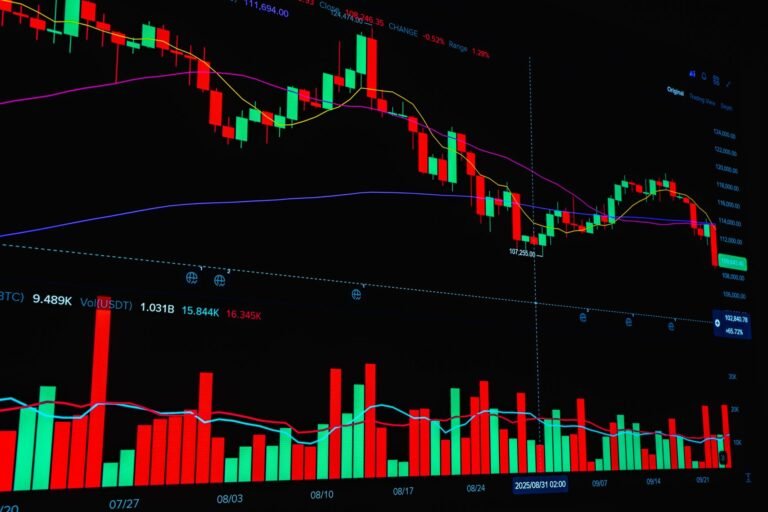
Bitcoin is grappling to maintain its position above the $70,000 mark as the Federal Reserve opted to keep interest rates unchanged, a decision that comes amid a backdrop of elevated inflation, tepid job growth, and geopolitical instability in the Middle East.
The Federal Reserve’s Federal Open Market Committee (FOMC) announced on Wednesday that it would maintain the federal funds target range at 3.50% to 3.75%, marking the second consecutive meeting without a rate adjustment. This decision follows a period of rate cuts last year, and the Fed’s stance reflects a cautious approach to economic conditions.
Market Reactions and Economic Indicators
Bitcoin’s price reacted to the Fed’s announcement with a slight dip, trading around $70,500, a 3.6% decline over the past 24 hours. Despite this, the cryptocurrency had reached a high of $76,000 last week, its highest level in over a month. However, the recent pullback is partly attributed to investors’ concerns over inflation data and global uncertainties.
The FOMC noted in its statement that inflation remains elevated, and job gains have been sluggish, with the unemployment rate ticking up to 4.4% in February. The committee emphasized a data-dependent approach, indicating that future policy decisions will be heavily influenced by incoming economic information.
Geopolitical Factors and Energy Prices
The ongoing conflict involving the U.S., Israel, and Iran has added another layer of complexity to the market. Energy prices have surged, with Brent crude climbing 3.8% to $107.38 per barrel following reports of an Israeli strike on the South Pars gas field in Iran. This development has not only affected energy markets but has also contributed to the volatility in Bitcoin and other risk assets.
Federal Reserve Chair Jerome Powell addressed the implications of rising energy prices during a press conference. He stated, Near-term measures of inflation expectations have risen in recent weeks, likely reflecting the substantial rise in oil prices caused by the supply disruptions in the Middle East.
Powell also noted that the full economic impact of the conflict is still uncertain and that the Fed will continue to monitor the situation closely.
Bitcoin’s Sensitivity to Monetary Policy
Historically, Bitcoin has been sensitive to changes in interest rate expectations. Lower interest rates tend to make cryptocurrencies more attractive relative to traditional assets, as they reduce the opportunity cost of holding non-yielding assets. However, the current combination of higher energy costs, persistent inflation, and geopolitical tensions has led investors to reassess their exposure to riskier assets, including Bitcoin.
Fed Chair Powell’s term will conclude in May, with former Fed Governor Kevin Warsh expected to succeed him if confirmed. Powell emphasized the importance of central bank independence and the need for stable prices, one of the Fed’s dual mandates.
Looking Ahead
As Bitcoin continues to hover around $70,000, traders are closely watching for any signals from the Fed that could influence future monetary policy. The market’s sensitivity to both economic data and geopolitical events underscores the ongoing challenges for digital assets in a complex global environment. While the immediate outlook remains uncertain, the long-term trajectory of Bitcoin and other cryptocurrencies will likely be shaped by how effectively they can navigate these multifaceted risks.
About the Author