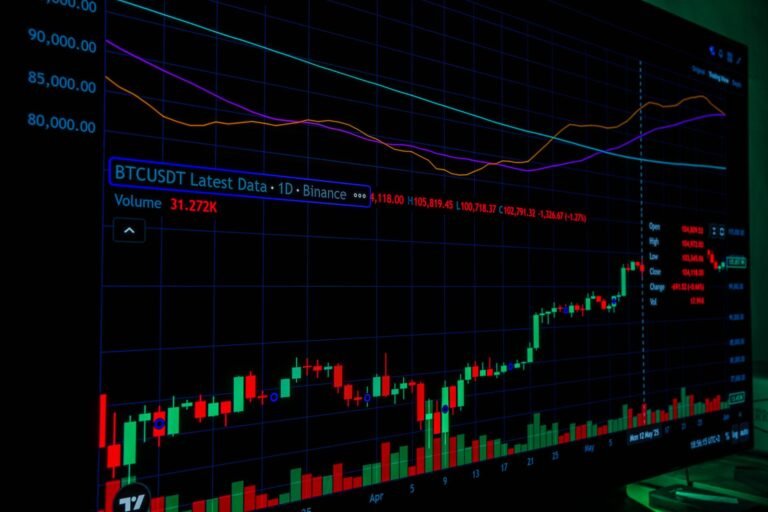
Bitcoin (BTC) is currently trading at $68,351, with a market cap of approximately $1.36 trillion and a 24-hour trading volume of $20.6 billion, as of March 22, 2026. Despite the stable price action between $68,211 and $70,978, the broader technical indicators are painting a more nuanced picture.
A Neutral Facade Masks Growing Pressure
On the surface, the market appears to be in a neutral stance, with Bitcoin oscillating within a relatively tight range. However, a closer look at the underlying technicals reveals a different story. Moving averages (MAs) and other technical indicators suggest that the market is under increasing downside pressure. This pressure could be a precursor to a more significant price movement, either to the upside or downside.
Key Technical Indicators to Watch
Several key technical indicators are worth monitoring:
- Moving Averages: The 50-day and 200-day moving averages are converging, which could indicate a potential crossover event. A bearish crossover (when the 50-day MA crosses below the 200-day MA) could signal a downturn.
- Relative Strength Index (RSI): The RSI is currently neutral, hovering around 50. However, a drop below 30 or a rise above 70 could indicate overbought or oversold conditions, respectively.
- Volume: While the 24-hour volume is steady, a sudden spike in volume could signal a significant price move. Historically, high volume often precedes major market shifts.
Market Sentiment and Institutional Influence
Market sentiment remains mixed. Retail investors are showing cautious optimism, while institutional investors are taking a more conservative approach. The recent volatility in global financial markets, driven by geopolitical tensions and economic uncertainty, has also influenced Bitcoin’s price action. Institutions are likely monitoring these external factors closely, as they can have a significant impact on the crypto market.
Looking Forward
The next few weeks will be crucial for Bitcoin. Traders and investors should pay close attention to the key support and resistance levels, as well as the broader macroeconomic environment. A breach of the $68,000 support level could trigger a deeper correction, while a sustained break above $70,000 could signal a bullish continuation.
Ultimately, the market’s direction will depend on a combination of technical factors, market sentiment, and external economic conditions. For now, caution is advised, and traders should be prepared for potential volatility.
About the Author