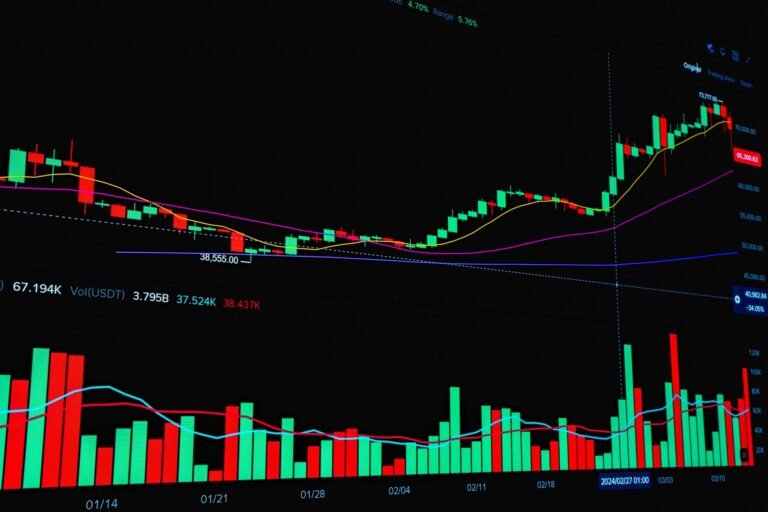
The cryptocurrency market has seen a significant shift as WLFI, the token linked to Trump-affiliated World Liberty Financial, surged nearly 10% following a major announcement. A $3.5 trillion asset servicer has agreed to pilot the firm’s USD1 stablecoin, positioning it as a key player in the rapidly evolving world of tokenized funds.
Stablecoin Pilot Signals Institutional Confidence
The pilot program, which will use USD1 as a settlement rail for tokenized funds, marks a significant step towards mainstream adoption. World Liberty Financial co-founder Zak Folkman emphasized the potential of USD1, describing it as an institutional-grade stablecoin designed for real-world settlement, cross-border payments, and future AI-driven commerce. The stablecoin will offer real-time on-chain proof of reserves, enhancing transparency and trust.
Regulatory Momentum Grows
At a World Liberty Financial forum held at Mar-a-Lago, Sen. Bernie Moreno and Coinbase CEO Brian Armstrong called for swift passage of a U.S. crypto market structure bill. They argued that clear regulatory guidelines are essential for maintaining American leadership in financial innovation. The bill, if passed, could provide the clarity and stability needed to attract more institutional investors to the crypto space.
Market Reactions and Future Prospects
While WLFI’s rise is notable, Bitcoin (BTC) and Ethereum (ETH) continue to trade near multi-week lows. This divergence highlights the growing importance of stablecoins and their potential to drive broader adoption and institutional participation. The stablecoin sector is expanding rapidly, with several major players entering the market and exploring new use cases.
World Liberty Financial’s USD1 is not the only stablecoin making waves. South Korea’s Hanwha recently invested $13 million in ‘seedless’ crypto wallets, signaling a growing interest in the technology from traditional financial institutions. Meanwhile, real estate billionaire Barry Sternlicht has expressed a desire to tokenize assets, but cited U.S. regulation as a significant barrier.
Expert Analysis
Industry experts are optimistic about the future of stablecoins and their role in the broader financial ecosystem. Sam Altman, CEO of OpenAI, recently unveiled ‘EVMbench,’ a tool designed to test whether AI can ensure the security of smart contracts. This development underscores the growing intersection between AI and blockchain technology.
However, challenges remain. Banking trade groups have been blamed for the impasse on the market structure bill, with Brian Armstrong of Coinbase calling for greater cooperation. The ongoing debate over crypto regulation continues to impact market sentiment, with Bitcoin dipping to $66,000 and U.S. stocks losing steam as the Fed minutes hint at possible rate hikes.
Conclusion
The rise of WLFI and the pilot of USD1 by a major asset servicer are clear indicators of the growing institutional interest in stablecoins. As regulatory clarity improves and more traditional financial institutions embrace blockchain technology, the crypto market is poised for significant growth. The coming months will be crucial in determining whether these developments can translate into sustained market momentum and broader adoption.
About the Author