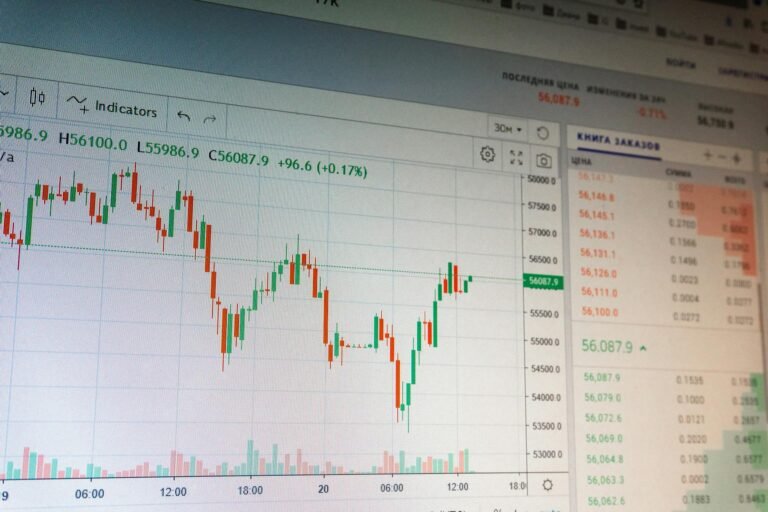
Bitcoin (BTC) has been hovering around the $68,000 mark, but the resilience of its price may be masking a deeper issue: the mounting pressure on short-term whales. These large holders, who acquired their BTC more recently, are now facing significant unrealized losses, which could have broader implications for the market.
The Pressure on Short-Term Whales
According to market analyst Carmelo Alemán, the wallets holding between 1,000 and 10,000 BTC control a staggering 4.483 million BTC. Of this, 1.287 million BTC (28.7%) belongs to short-term holder (STH) whales, while 3.196 million BTC (71.3%) is held by long-term holder (LTH) whales. The cost basis gap between these two groups is stark: STH whales have a realized price of $88,494, resulting in a 22% unrealized loss, while LTH whales have a realized price of $41,626, maintaining a 65% profit margin.
Realized Losses and Market Sentiment
The Binance whale inflow ratio, which measures the share of the 10 largest BTC deposits relative to total inflows, has climbed to 0.62 from 0.4 in just two weeks. This increase suggests a rise in large-holder deposits, potentially indicating a growing whale-driven sell-side activity. One notable movement involves the ‘Hyperunit whale,’ believed to be Garrett Jin, who transferred nearly 10,000 BTC to Binance.
Despite these pressures, realized losses among STH whales have remained limited since Bitcoin’s all-time high of $126,000 in October 2025. This resilience could be a sign of strong conviction among these holders, but it also raises questions about their long-term sustainability in a bearish market.
The Long-Term Perspective
The long-term holders (LTHs) continue to dominate the market, controlling 71% of the large-wallet supply and maintaining a positive profit margin. The LTH spent output profit ratio (SOPR) has dropped to 0.88, indicating that coins are being sold at a loss. However, the monthly average SOPR remains at 1.09, and the annual average stands at 1.87, suggesting that long-term profitability is still intact.
Joao Wedson, founder of Alphractal, noted that the LTH net-unrealized profit/loss (NUPL) stands at 0.36, meaning unrealized profits remain positive. Historically, cycle bottoms have formed only after this metric turned negative, implying that Bitcoin may need another dip to confirm capitulation among the LTH cohorts.
The Key Structural Level
The key structural level for Bitcoin remains near $41,626, the LTH realized price. As long as BTC holds above this level, the data reflects redistribution rather than structural capitulation. This level is crucial because it represents the point at which long-term holders would start to realize losses, potentially leading to a more significant market downturn.
Looking Forward
The current market dynamics highlight the tension between short-term and long-term holders. While the short-term whales are under pressure, the long-term holders remain steadfast, maintaining their profits and contributing to market stability. However, the increasing inflow of BTC to exchanges and the potential for further sell-side activity suggest that the market may not be out of the woods yet.
Investors should keep a close eye on the $41,626 level and the behavior of long-term holders. If this level is breached, it could signal a more profound market correction. Conversely, if the market can hold above this level, it may indicate a period of consolidation and redistribution, setting the stage for a potential rebound in the future.
About the Author