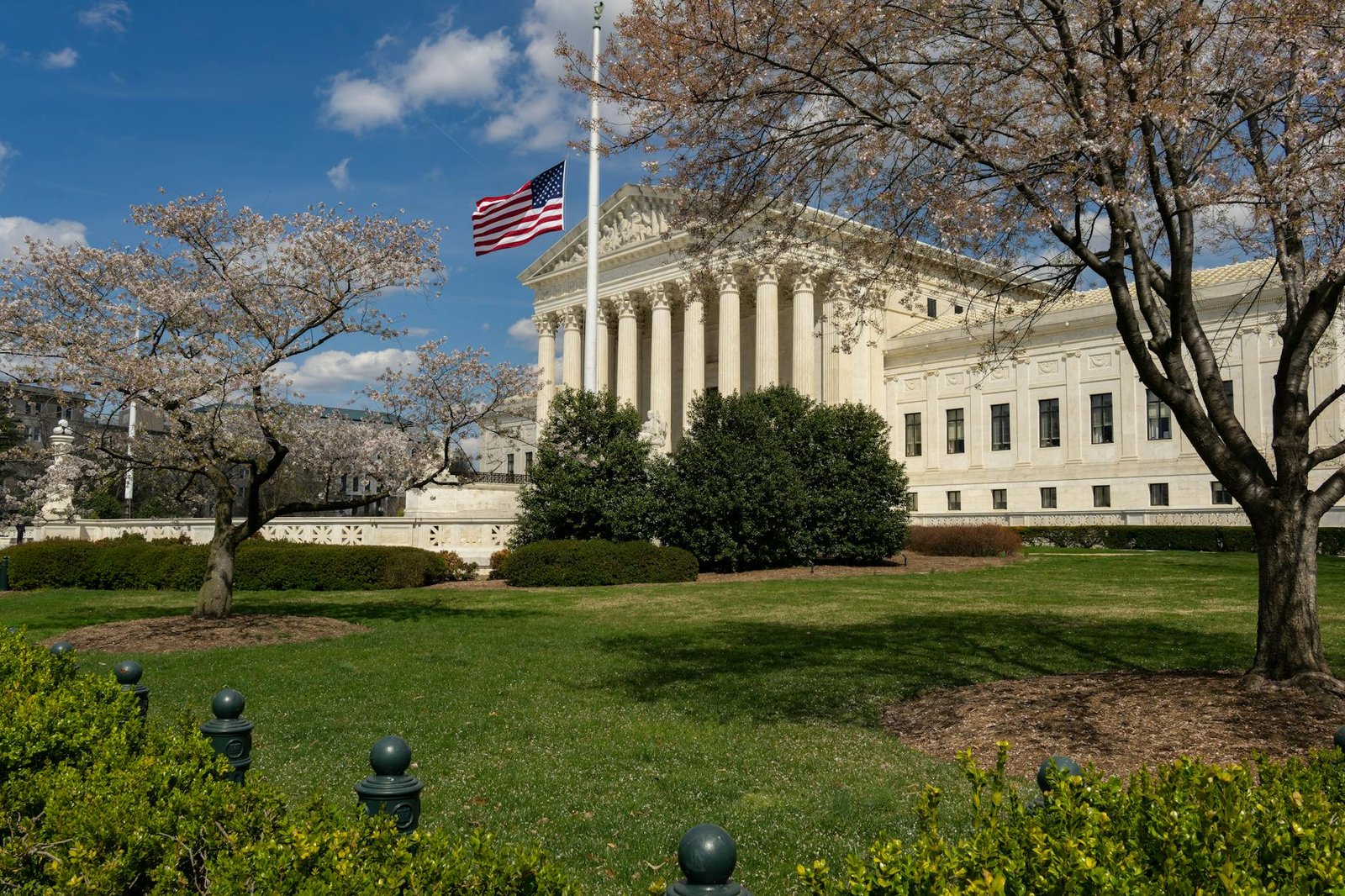
The U.S. Supreme Court has delivered a significant blow to former President Donald Trump’s trade policy, ruling that the sweeping tariffs imposed under the International Emergency Economic Powers Act (IEEPA) were illegal. The Court found that Trump had exceeded the authority granted by the act, a decision that is likely to have far-reaching implications for U.S. trade relations and the economy.
A Landmark Decision
The ruling, which comes after years of legal battles, marks a critical moment in the ongoing debate over executive power and trade policy. The IEEPA, enacted in 1977, was designed to give the president authority to address national emergencies, but the Court determined that the tariffs imposed by Trump did not meet the act’s stringent criteria. In a dissenting opinion, Justice Brett Kavanaugh expressed concern that the refund process for the tariffs could be ‘a mess,’ highlighting the logistical challenges that lie ahead.
Background of the Tariffs
Trump’s tariffs, which targeted a wide range of imports from countries including China, were implemented in 2018 and 2019 as part of his ‘America First’ trade agenda. The administration argued that these tariffs were necessary to protect national security and domestic industries. However, many economists and trade experts criticized the tariffs, arguing that they were more about political posturing than genuine economic necessity.
Immediate Implications
The Supreme Court’s decision means that the tariffs must be rescinded, and affected parties will be eligible for refunds. However, the process of determining who is entitled to refunds and how those refunds will be processed is expected to be complex and time-consuming. The ruling also raises questions about the future of U.S. trade policy and the extent to which the executive branch can unilaterally impose economic sanctions.
Long-Term Impact
While the immediate focus is on the refund process, the long-term impact of the Supreme Court’s decision could be even more significant. The ruling may serve as a check on the executive branch’s ability to use trade policy as a tool for broader political and economic goals. It could also influence future legislation and international trade negotiations, as other countries may reassess their own trade policies in light of the U.S. decision.
Looking Forward
The Supreme Court’s decision is a clear signal that the balance of power in trade policy is shifting. As the U.S. government and affected businesses navigate the refund process, policymakers will need to consider how to prevent similar overreach in the future. The ruling is likely to spark a broader conversation about the role of trade policy in national security and economic stability, with implications that extend far beyond the immediate context of Trump’s tariffs.
About the Author