

Written by Nate Kostarstaff writerReviewed by Sam Bourgistaff writer
Written by Nate Kostarstaff writerReviewed by Sam Bourgistaff writerAs BitMEX exits, analysts warn crypto consolidation is accelerating
BitMEX’s shutdown marks the end of one of crypto’s earliest derivatives exchanges as analysts point to rising regulatory costs, market concentration and the shift toward licensed trading venues.
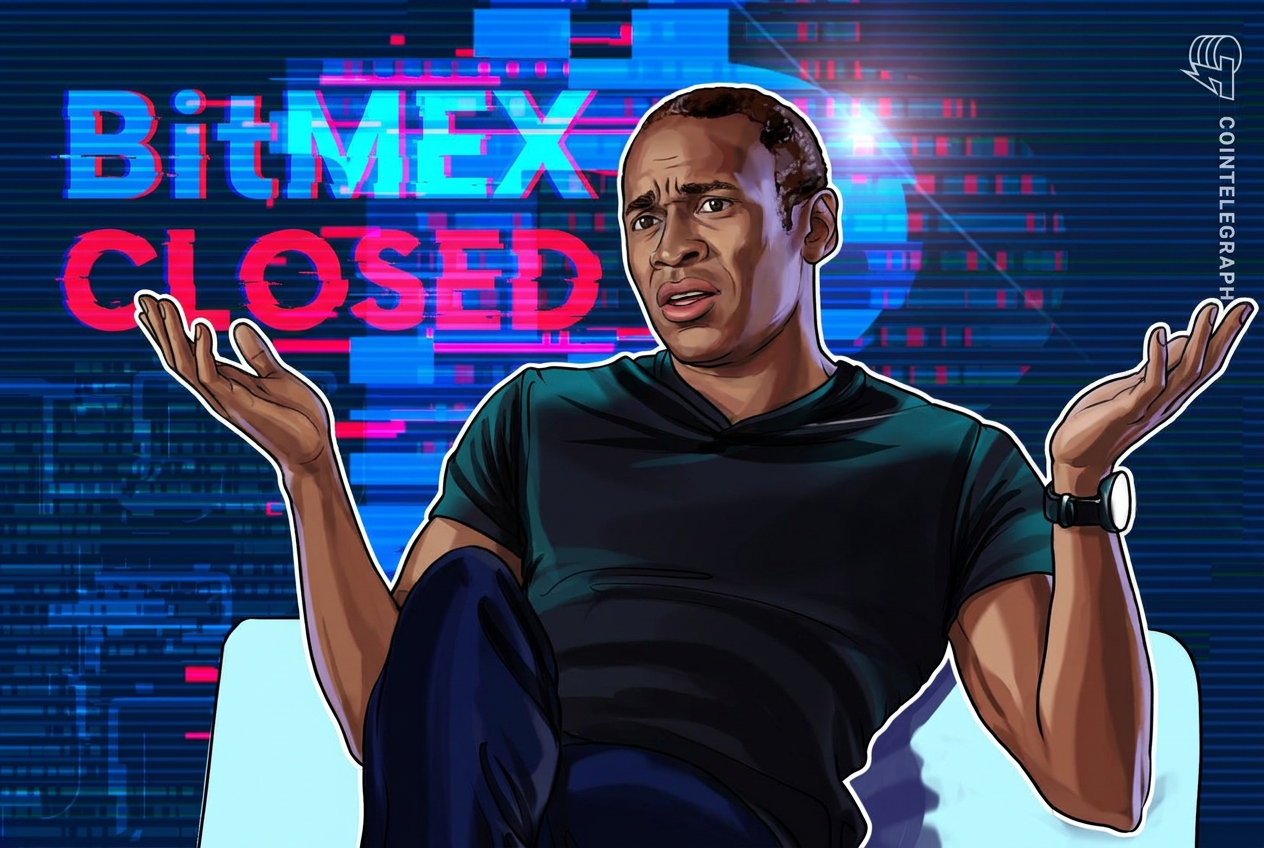
The closure of crypto derivatives exchange BitMEX is prompting fresh questions about whether the industry is entering a new phase of consolidation, as analysts point to market-share concentration and rising regulatory costs squeezing smaller platforms.
While BitMEX helped pioneer perpetual swaps that became a cornerstone of digital asset derivatives trading, its daily Bitcoin futures volume began declining around May 2021 and never recovered to its 2020 daily peak of between $1 billion and $5 billion, according to data from CryptoQuant.
Restructuring adviser Roshan Dharia told Cointelegraph the exchange’s demise reflects structural pressures facing mid-sized centralized exchanges, where liquidity has increasingly concentrated among the industry’s largest players and regulatory compliance costs continue to rise. He said:
The top five platforms now control an estimated 80% of global spot volume, leaving mid-tier and regional exchanges with shrinking margins and no viable path to scale… The headwinds are structural, not cyclical.
Source: BitMEX
Related: BitMEX pitches ‘canary fund’ alternative to Bitcoin quantum coin freeze
The fall of BitMEX
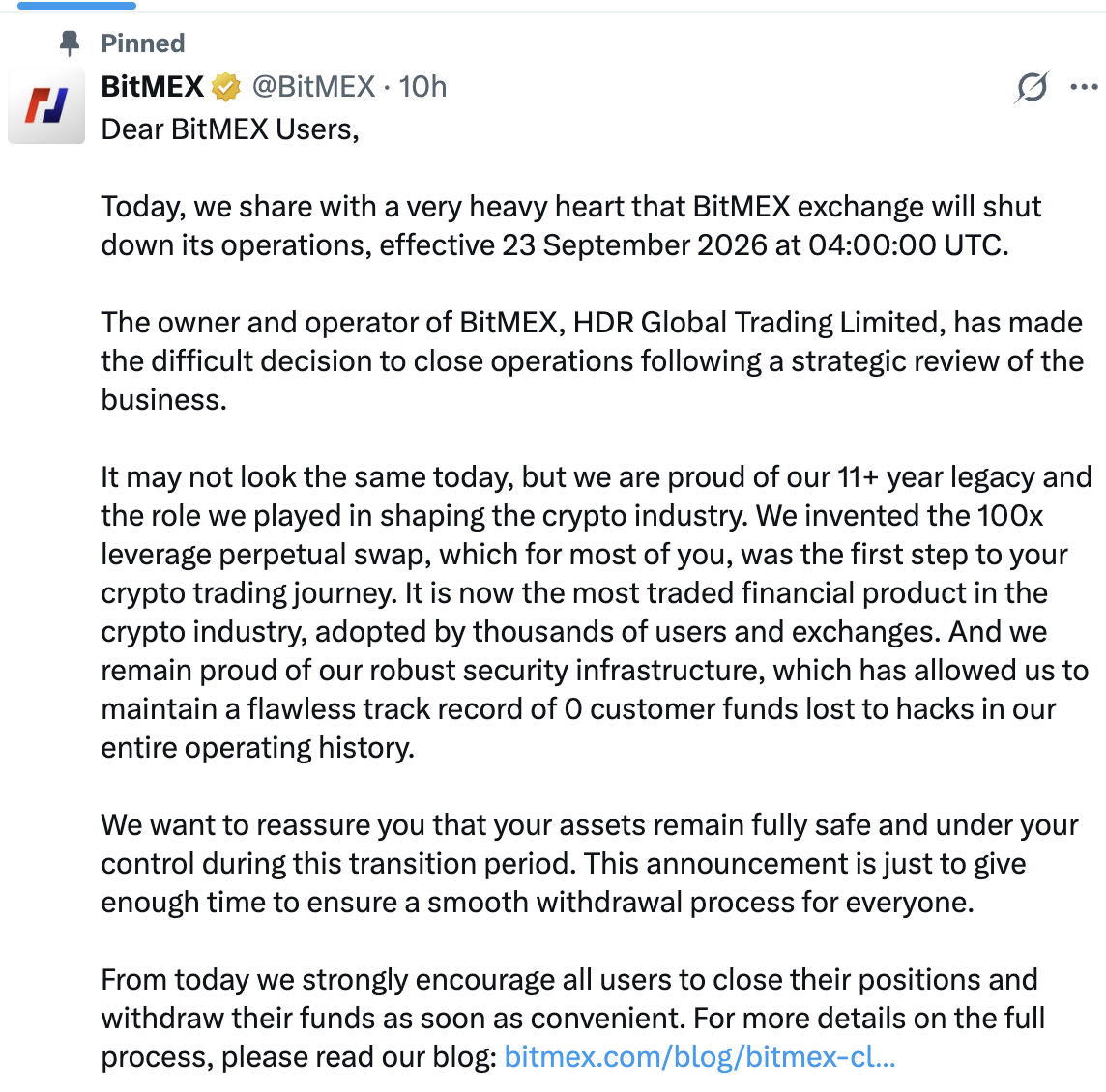
BitMEX, the crypto derivatives exchange founded in 2014 by Arthur Hayes, Ben Delo and Samuel Reed, announced on Thursday that it will shut down. Trading is scheduled to end on Sept. 23 following a strategic review by parent company HDR Global Trading.
The shutdown announcement also triggered a sharp sell-off in BitMEX’s utility token, BMEX, which plunged more than 90% after the exchange revealed plans to wind down operations.
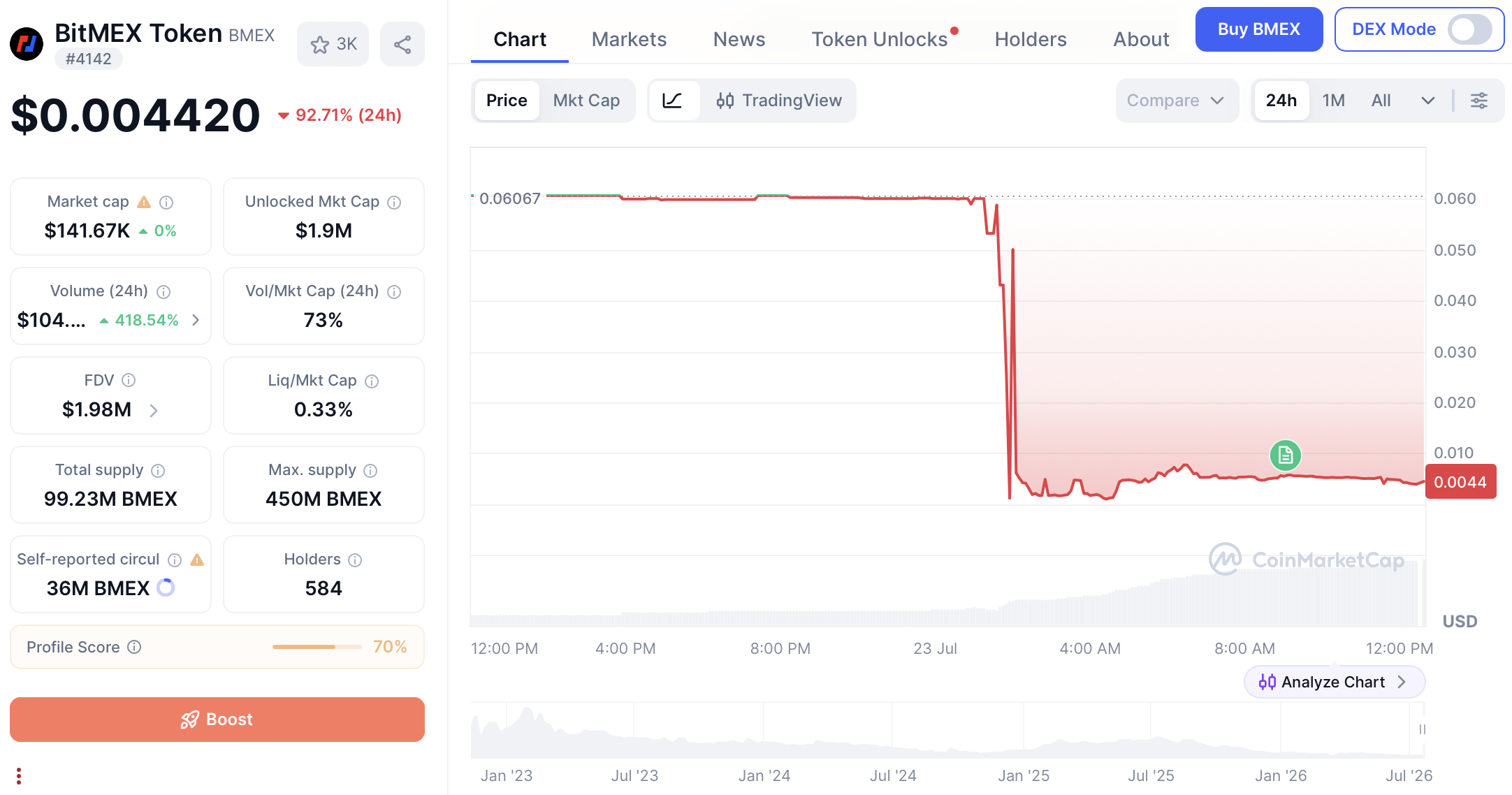
BMEX token drops over 90%. Source: CoinMarketCap.
The announcement came after years of declining market share. CoinGecko ranked BitMEX ninth among derivatives exchanges in August 2023 with a 0.9% share of trading volume. By 2025, it no longer appeared among the firm’s top 10 perpetual exchanges, even as annual perpetual trading volume across those platforms climbed 47.4% to a record $86.2 trillion.
Related: Arthur Hayes dumps WLD days after Maelstrom’s AI IPO pitch
The rise of regulated competitors
BitMEX rose to prominence by offering offshore perpetual derivatives years before similar products became available through regulated venues. Today, those same products are increasingly offered through licensed exchanges in jurisdictions including the United States and the United Kingdom.
In the US, Coinbase launched perpetual-style futures through a Commodity Futures Trading Commission-regulated exchange in May after receiving no-action relief from the regulator. The CFTC also approved Bitcoin perpetual futures for Kalshi. In June, Kraken followed with CFTC-regulated perpetual futures for eligible US traders through its recently acquired Bitnomial exchange.
The trend has also extended beyond the United States. This month, Coinbase secured a UK investment services license allowing it to expand its derivatives business ahead of the country’s new crypto regulatory regime.
Magazine: Here’s why the CLARITY Act’s ethics deal may be so hard to reach


Subscribe to daily byte-sized crypto news from Cointelegraph
More on the subject



About the Author