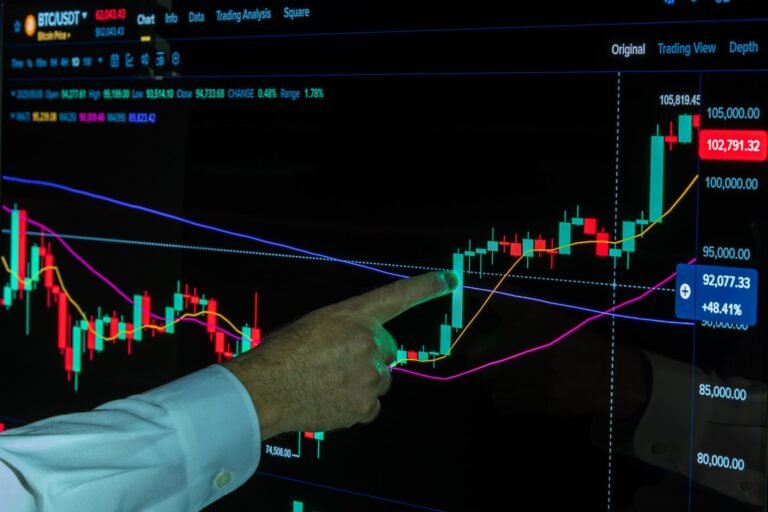
Bitcoin drops below $73,000 as US strikes on Iran spark $1 billion liquidations
Crypto majors sold off 3% to 4% and nearly $1 billion in leveraged positions were wiped out after U.S. airstrikes on an Iranian military site near the Strait of Hormuz reignited the conflict markets had started to price out.
Bitcoin drops below $73,000 as US strikes on Iran spark $1 billion liquidations
Crypto majors sold off 3% to 4% and nearly $1 billion in leveraged positions were wiped out after U.S. airstrikes on an Iranian military site near the Strait of Hormuz reignited the conflict markets had started to price out.
Bitcoin fell below $73,000 amid U.S. airstrikes on Iran, triggering a broad sell-off in cryptocurrencies and other risk assets.
Nearly $1 billion in leveraged crypto positions were liquidated in 24 hours, with long positions making up 93 percent of the wipeout and bitcoin and ether leading the losses.
The strikes near the Strait of Hormuz, new U.S. sanctions on Iran and regional military tensions reversed recent cease-fire optimism, pushing global stocks lower and oil prices higher.
Hyperliquid (HYPE) was the only major to hold a weekly gain, down 4.5% on the day but still up 2.4% over the past seven days. Tron (TRX) held a 1.9% weekly gain despite the broad decline.
The drop flushed leveraged traders. CoinGlass data shows $958.8 million in total liquidations over 24 hours across 167,706 traders, with $897 million coming from long positions and $61 million from shorts.
Bitcoin liquidations led at $386 million, followed by ether at $246 million, with the largest single liquidation order was a $15.34 million BTC position on Hyperliquid.
A 93% long-skew on a near-billion-dollar flush is what happens when traders are positioned for a recovery and the market moves the other way. The leverage built up through the mid-May range got cleared in a single session.
The trigger came from the Middle East. U.S. Central Command carried out airstrikes on an Iranian military site near the Strait of Hormuz and shot down four one-way Iranian attack drones fired at a commercial ship, with a U.S. official describing the action as defensive and aimed at maintaining the ceasefire that began last month.
The U.S. Treasury imposed new sanctions on Iran’s Persian Gulf Strait Authority, accusing it of extorting vessels transiting the strait. Iran targeted the American airbase the strikes originated from, according to a report citing the Islamic Revolutionary Guard Corps.
Kuwait said it was responding to hostile missile and drone threats, with its army warning that explosions heard in the country were air defense systems intercepting targets.
President Donald Trump said no single nation would control the waterway. “It’s international waters,” Trump told a cabinet meeting at the White House. “The strait’s going to be open to everybody,” adding that the U.S. would “watch over it.”
Risk assets fell across the board. The MSCI All Country World Index retreated 0.4% from a record high, a gauge of Asian shares dropped 1.7%, and futures for the S&P 500 and Nasdaq 100 pointed lower. Oil climbed as the strikes clouded the outlook for a deal to reopen the strait.
The reaction shows how quickly the ceasefire optimism that had been building unwound. Crypto had held its range through several weeks of Iran headlines, with bitcoin staying above $74,000 even as ETF demand cooled. Thursday’s strikes broke that floor, and the speed of the liquidation cascade suggests traders were caught leaning the wrong way.
CNBC reported Tuesday that Musk is discussing a merger between Tesla and SpaceX that would tie his tech empire closer together and instantly create the world’s fifth-largest corporate bitcoin treasury, worth $3.3 billion.
What to know:
Elon Musk is exploring a potential merger of Tesla and SpaceX, a move that would deepen operational overlap in areas such as power infrastructure and AI-related computing.
A combined Tesla-SpaceX entity would control about 30,221 bitcoin, worth roughly $3.3 billion, making it the fifth-largest public corporate holder of the cryptocurrency.