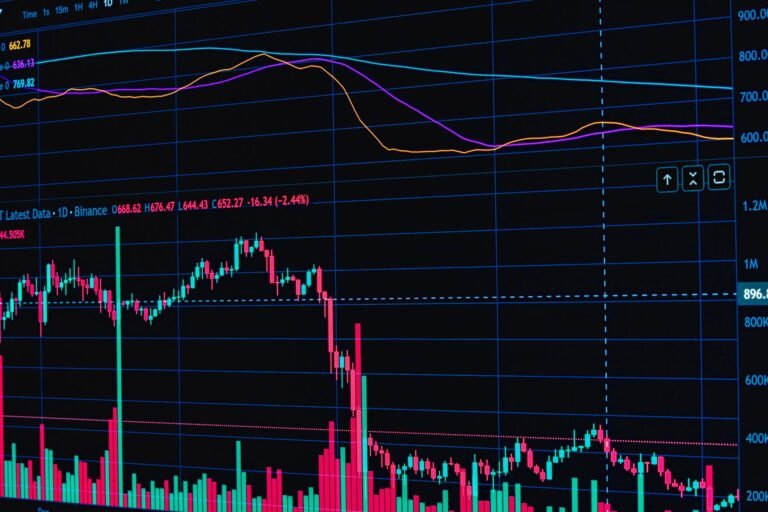
Bitcoin futures demand has reached its lowest point since 2024, raising concerns among traders that institutional investors are becoming wary of the market. Despite this downturn, there are signs that major institutions remain committed to the cryptocurrency, suggesting a more complex picture than a simple exodus.
The Bitcoin futures aggregate open interest on major exchanges dropped to $32 billion on Sunday, a 20% decline from one month prior. Even when measured in Bitcoin terms, the current demand stands at 491,300 BTC, the lowest level since August 2024. This decline has been partly attributed to forced liquidations of bullish positions, which caught many traders off guard.
Declining Confidence, Persistent Activity
The annualized premium (basis rate) on Bitcoin monthly futures contracts has also hit a one-year low of 2%. Typically, this metric ranges between 5% and 10% to account for the longer settlement period. The sustained low basis rate over the past 12 months, including a 50% rally between April and May 2025, indicates a lack of bullish sentiment.
However, it would be premature to conclude that institutional investors have abandoned Bitcoin. Spot Bitcoin exchange-traded funds (ETFs) continue to trade over $3 billion per day on average, with significant holdings by some of the world’s largest mutual and pension fund managers. Additionally, publicly listed companies like MicroStrategy (MSTR US) and MARA Holdings (MARA US) hold over $79 billion in Bitcoin on their balance sheets.
Derivatives Market Shows Resilience
Despite the bearish sentiment, the Bitcoin options market remains stable. The put-to-call options premium stood at 0.7 on Monday, indicating that demand for put (sell) options is lower than for call (buy) options. A brief surge in bearish strategies on Friday did not persist, suggesting that the market is not under significant stress.
The Bitcoin options put-to-call premium at Deribit, a leading options exchange, further supports this view. The market shows no signs of major trouble or lasting stress, despite the recent challenges.
Global Context and Institutional Adoption
Bitcoin’s underperformance relative to gold and the stock market has likely contributed to the shift in investor attention. However, the ongoing adoption by countries like Bhutan, El Salvador, and the United Arab Emirates demonstrates that institutional interest in Bitcoin is far from over.
The $7.5 billion in Bitcoin futures open interest on the CME is a clear indicator of ongoing institutional activity. Each short (sell) order must be matched by a long (buy) order, maintaining market balance. While the current environment is marked by caution, the underlying infrastructure and institutional support remain robust.
Looking Ahead
As fear and uncertainty gradually subside, more buyers are likely to return, signaling the end of the current downward trend. While it remains unclear if $60,000 represents the absolute bottom for this market cycle, Bitcoin’s resilience and fixed supply continue to underscore its value as a secure asset.
The $1.4 trillion cryptocurrency market has demonstrated its strength and stability, showing no signs of failing. As the market evolves, institutional adoption is expected to grow, further solidifying Bitcoin’s position as a key asset class.
About the Author