
Bitcoin Tests $75,000 as Whales Accumulate 270,000 BTC
Bitcoin’s climb toward $75,000 is meeting rising sell pressure despite steady institutional demand. Whale accumulation and shrinking exchange reserves are tightening supply dynamics.


Key Takeaways:
- Bitcoin tests $75,000 with $200 million to $450 million daily ETF inflows, but rising sell pressure attempts to cap gains.
- Whales added 270,000 BTC in 30 days, yet 11,000 BTC/hour exchange inflows signal distribution.
- Resistance at $76,800 may trigger a pullback unless institutional demand absorbs supply.
Selling Pressure Builds as Bitcoin Rally Faces Resistance
Bitcoin’s advance toward the mid-$70,000 range is encountering mounting resistance, as steady institutional demand runs into a wave of supply from large holders.
The cryptocurrency has climbed from around $71,000 to the mid-$70,000s in recent weeks, supported largely by inflows into U.S.-listed spot exchange-traded funds. Several sessions recorded inflows between $200 million and $470 million, helping sustain upward momentum even as broader markets adjusted to higher oil prices and shifting interest rate expectations.
Yet the rally is beginning to show signs of strain.
On-chain data indicates that large investors, often referred to as whales, accumulated roughly 270,000 BTC over the past 30 days, marking the most aggressive buying streak since 2013. At the same time, exchange reserves have fallen to their lowest levels since late 2017, suggesting a tightening supply environment.
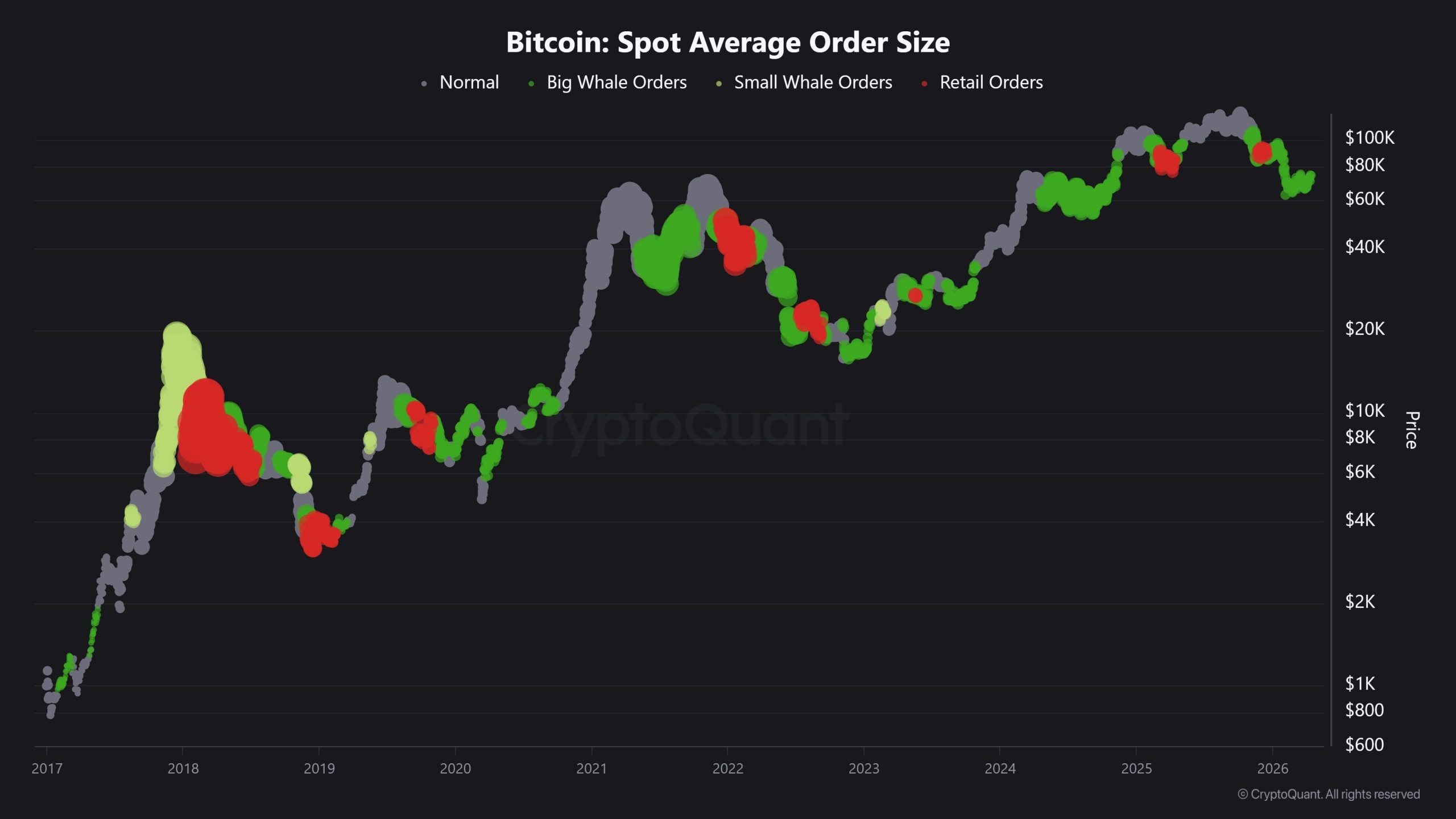
Despite this, selling pressure is emerging as prices approach key technical and psychological levels. Around $76,800 sits the realized price for short-term holders, a metric that reflects the average cost basis of recent buyers. This level often acts as a trigger point where traders look to exit positions near breakeven.
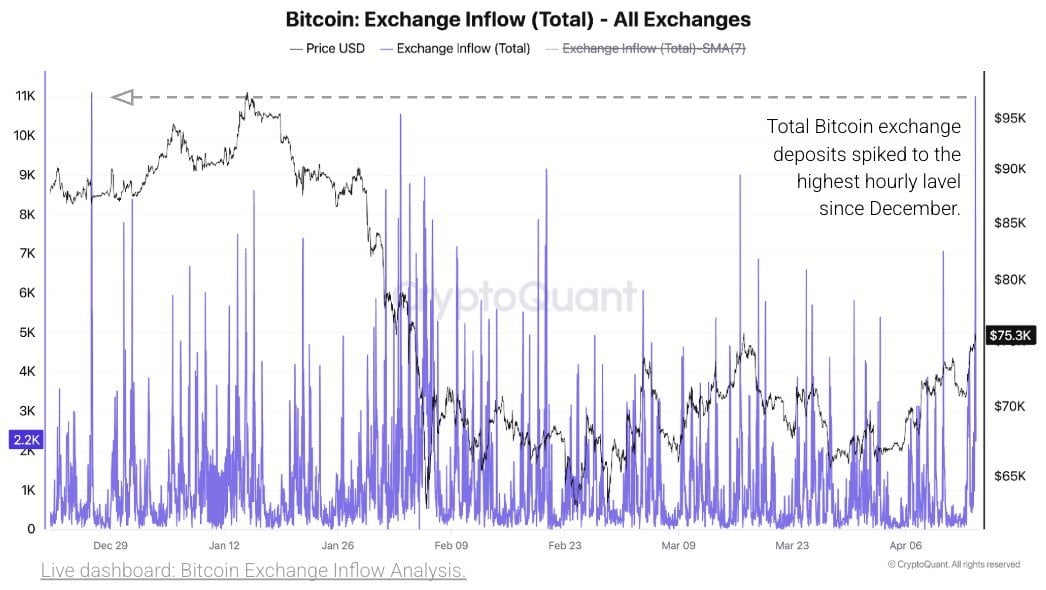
Market data shows that exchange inflows have surged as bitcoin tests the $75,000 to $76,000 range, with flows reaching about 11,000 BTC per hour at peak levels, the highest since December. This pattern typically signals increased selling activity, as holders move assets onto exchanges to liquidate positions.
Order book data reinforces the picture of a market at a crossroads. Significant sell liquidity has built up between $75,000 and $76,000, while buy-side support is concentrated closer to $71,500. Bitcoin has so far managed to hold above $74,000, a level traders see as critical to maintaining upward momentum.
The result is a two-sided market. Institutional inflows and macro-driven demand continue to provide a floor, but large holders appear to be using the rally to reduce exposure, adding supply at higher levels.

Bitcoin Volatility Drives $12 Million Fees for Yield Basis
Yield Basis generated $12 million in fees in Q1 as bitcoin volatility drove trading activity. The protocol’s model shows how…


Bitcoin Volatility Drives $12 Million Fees for Yield Basis
Yield Basis generated $12 million in fees in Q1 as bitcoin volatility drove trading activity. The protocol’s model shows how…
Bitcoin Volatility Drives $12 Million Fees for Yield Basis
Yield Basis generated $12 million in fees in Q1 as bitcoin volatility drove trading activity. The protocol’s model shows how…
This dynamic creates a narrow path for further gains. A sustained breakout above the mid-$70,000 range would require continued inflows strong enough to absorb the growing sell pressure. Without that, the balance could shift quickly, leaving bitcoin vulnerable to a pullback toward the low-$70,000s.
For now, the market remains finely balanced. Supply is tightening in the long term, but in the short term, the willingness of large holders to sell into strength is shaping the next phase of price action.
Tags in this story
About the Author