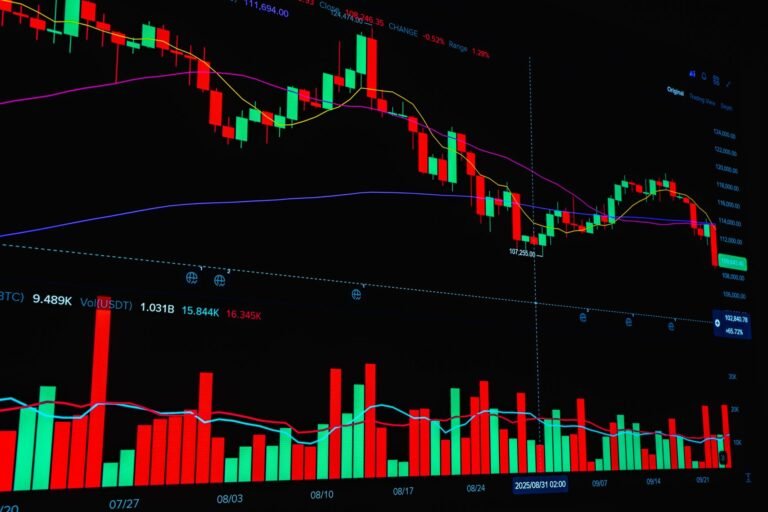
Bitcoin’s sharp 46% decline from its October peak near $126,100 to around $67,000 has sparked intense debate among market participants. While some attribute the downturn to fears over quantum computing, others see it as a result of shifting capital flows and tighter liquidity conditions.
On a recent episode of the Unchained podcast, Bitcoin developer Matt Corallo dismissed the notion that quantum computing is the primary driver of the price drop. ‘If quantum fears were a significant factor, we would see Ether outperforming Bitcoin, which is not the case,’ Corallo argued. Ether, Bitcoin’s closest rival, has also experienced a 58% decline since early October, suggesting that the market’s weakness is more broadly based.
Quantum Computing: A Red Herring?
The quantum computing debate has gained traction as researchers delve into post-quantum cryptography and asset managers update their risk disclosures. BlackRock, for instance, recently amended the registration statement for its iShares Bitcoin ETF to highlight quantum computing as a potential threat to the network’s security.
However, Corallo maintains that market pricing does not reflect an imminent quantum threat. ‘The current market environment is more about Bitcoin competing for capital against other sectors, particularly artificial intelligence (AI),’ he explained. AI’s infrastructure demands large data centers, specialized chips, and significant energy capacity, drawing investor attention and funding away from digital assets.
Bitcoin Mining and the AI Boom
The intersection of Bitcoin mining and AI infrastructure highlights the competitive landscape. Bitcoin mining difficulty recently surged to 144.4 trillion, a 15% increase and the largest percentage jump since 2021, following a 12% decline in difficulty. This volatility in mining difficulty reflects the dynamic nature of the network’s computational power.
Miner economics remain challenging, with hashprice, a measure of daily revenue per unit of hashrate, near multi-year lows around $23.9 per petahash per second. Large-scale miners with access to inexpensive power continue to expand, while others are reallocating resources toward AI and high-performance computing data centers.
Market Sentiment and Onchain Data
Onchain data suggests that Bitcoin is in a compression phase, with the market sentiment hovering in ‘extreme fear’ territory. Analytics firm Glassnode reports that Bitcoin has broken below its ‘True Market Mean,’ currently around $79,000, with the Realized Price at about $54,900. Bitcoin has traded within a $60,000 to $70,000 range, reflecting a period of consolidation.
Some analysts, like André Dragosch, head of European research at Bitwise, see Bitcoin as undervalued relative to global money supply growth, gold, and exchange-traded product flows. ‘While consolidation is likely, a rapid recovery is less probable without a significant macroeconomic catalyst,’ Dragosch noted.
Looking Ahead
Traders are closely monitoring U.S. core PCE inflation figures for signals on Federal Reserve policy. Higher inflation could theoretically support scarce assets, but a hawkish Fed response could strengthen the dollar and pressure risk markets. As of now, Bitcoin is trading near $67,000, with the market waiting for a clearer direction.
Ultimately, the current market dynamics highlight Bitcoin’s evolving role in a rapidly changing technological landscape. Whether the next move is driven by macroeconomic factors or a shift in investor sentiment, the coming months will be crucial for the cryptocurrency’s trajectory.
About the Author