Bitcoin’s price rally has a hidden rhythm. Here are the hours and days driving gains.
Bitcoin’s three-month rally shows a clear internal structure than most traders might expect, with performance clustering around specific trading windows across global sessions.
Bitcoin’s price rally has a hidden rhythm. Here are the hours and days driving gains.
Bitcoin’s three-month rally shows a clear internal structure than most traders might expect, with performance clustering around specific trading windows across global sessions.
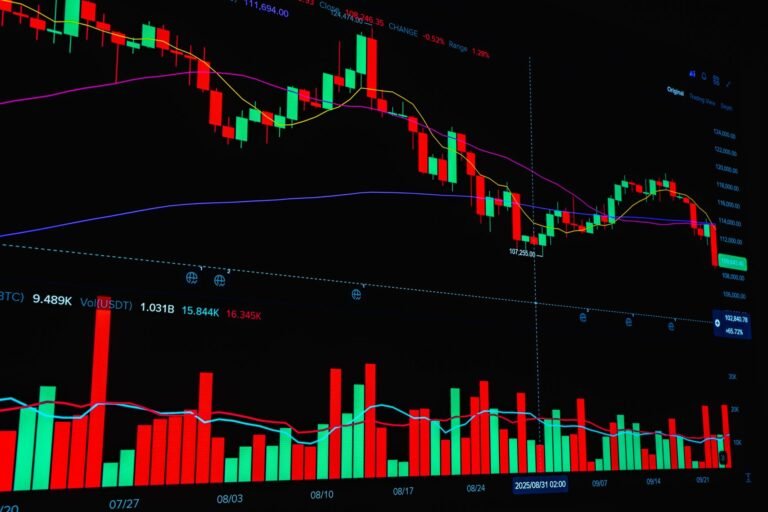
Days and hours that drive BTC gains. (Claudio Schwarz/Unsplash)
What to know:
Bitcoin’s roughly 30% rebound over the past three months has been driven mainly by trading during Asia-Pacific and U.S. hours, with Europe lagging.
The single strongest hour for returns has been the 00:00–01:00 UTC window.
Mondays have delivered by far the best average performance.
Data source Velo breaks the trading day into three eight-hour sessions: APAC from 00:00 to 08:00 UTC, covering Tokyo, Singapore, Seoul, and Sydney; Europe from 08:00 to 16:00 UTC, covering London and Frankfurt; and the U.S. from 16:00 to 00:00 UTC, covering New York.
The session picture: APAC and the U.S. are leading the rally
APAC and U.S. hours have done the heavy lifting throughout the roughly 31% price rise since Feb. 6. APAC has produced a return of 13%, with the U.S. at 11.5% and Europe lagging significantly at just 6.5%.
The U.S. session’s contribution is particularly notable because it was not always the leader. For most of February and March, returns during U.S. hours were mostly flat to negative, while APAC led the recovery. But that suddenly changed in early April, with the U.S. session flipping decisively positive.
Overall, the data shows that liquidity and momentum are strongest in APAC and the U.S. While this does not guarantee the continuation of trends, it does highlight when price discovery has been most active in the ongoing phase of the cycle, which some traders may find useful for market timing and risk management.
The next obvious question is which hours are optimal for trading during these best-performing sessions.
The answer to that is the midnight UTC candle, which represents the price action between 00:00 and 01:00. This has been the best hour, producing an average return of 0.10% over three months.
That’s a particularly interesting time window because it sits right at the intersection of two sessions: the late U.S. trading hours and early APAC, when fresh liquidity enters the market.
The second strongest hour is 15:00 UTC, deep in the European session, and the worst single hour is 06:00 UTC.
The best day to place a bullish bet: Monday
On a day-of-week basis, the data is unambiguous. Monday has been the strongest day of the week by a wide margin over the past three months, averaging a return of approximately 1.5%. Wednesday is a distant second at around 0.65%, and Friday is mildly positive at around 0.3%.
Thursday is the worst single day, averaging around negative 0.55%. Across the full three months, weekdays overall average approximately positive 0.4% while weekends average negative 0.25%.
To conclude, for bulls looking to time market entries, Monday has been the clearest edge in the data.
Crypto and traditional finance are converging fast, with perpetual futures emerging as the strongest bridge between the two.
What to know:
Crypto and traditional derivatives markets are rapidly converging, with perpetual futures at the center of that shift, panelists at Consensus Miami said.
Once a niche crypto instrument, perps are now expanding toward equities, commodities, and beyond.
Industry leaders say the regulatory policies and infrastructure enabling this crossover is already in…