
Blackrock Ether Staking ETF Draws $308M Over 20 Days as Assets Top $1B
Blackrock’s ether staking ETF has attracted $307.72 million across 20 inflow days since late July without recording a single day of net redemptions. The streak strengthens the case that yield-bearing ethereum ETFs could become an important second leg of institutional demand for ETH.


Key Takeaways
- Blackrock’s ETHB drew $307.72M across 20 inflow days since July 28, with zero net outflow days.
- Staking up to 95% of ETH could tighten liquid supply and broaden ethereum’s appeal to yield seekers.
- Investors will watch whether ETHB can keep scaling alongside Blackrock’s much larger ETHA fund.
Blackrock Stakes 75% of ETHB as Inflows Rise
Blackrock’s newer ether ETF is quietly building one of the cleaner accumulation streaks in crypto funds.
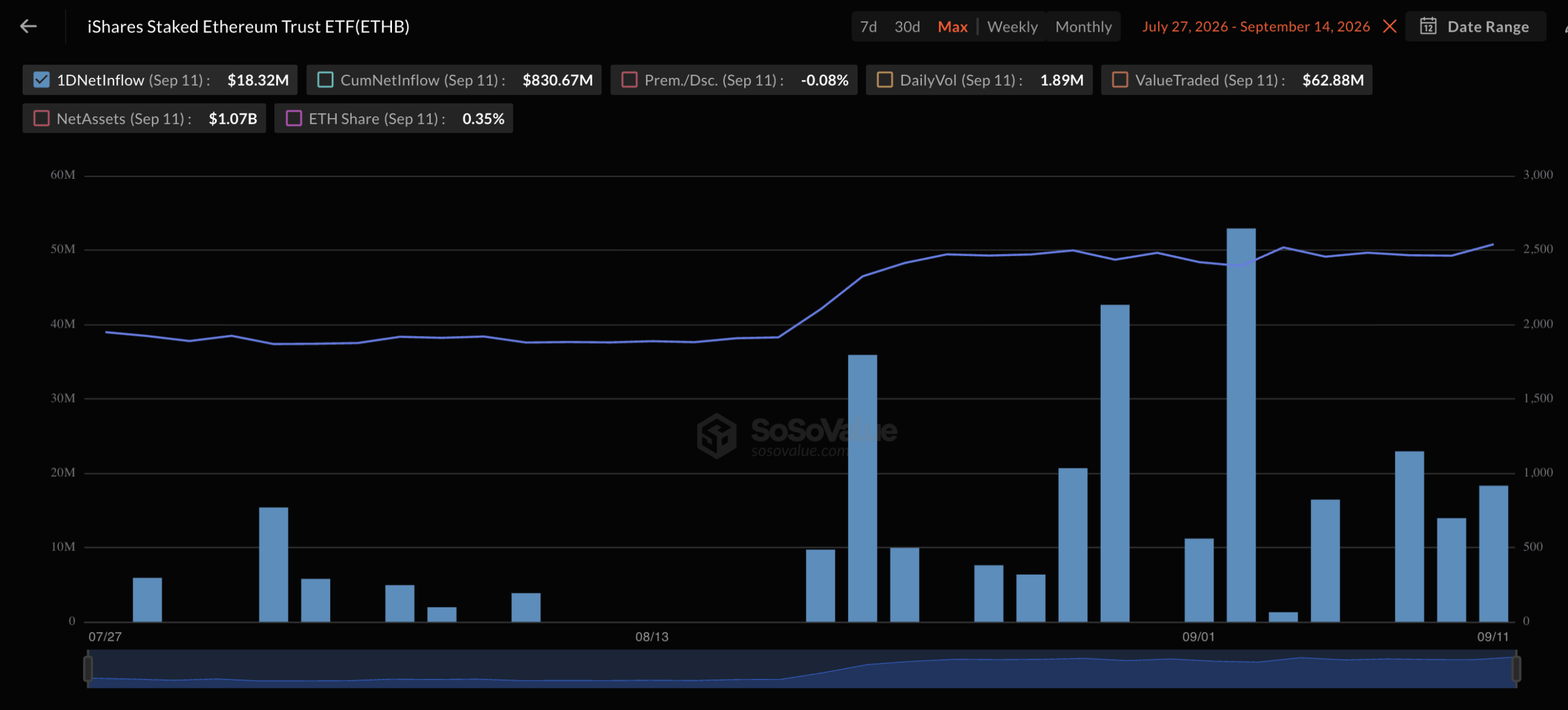
Between July 28 and Sept. 11, Blackrock’s Ether Staking ETF, ETHB, recorded 20 days of inflows totaling $307.72 million, with no single day of outflows during that period. Demand accelerated into late August and early September. The fund attracted $42.64 million on Aug. 28 and another $52.91 million on Sept. 2.
Since launching on Nasdaq on March 12, ETHB has accumulated $830.67 million in net inflows, according to SosoValue. Blackrock data puts net assets at roughly $1.05 billion after just six months since launch.

Blackrock is Selling Ether Plus Yield
ETHB differs from a standard spot ethereum ETF because it stakes between 70% and 95% of its holdings.
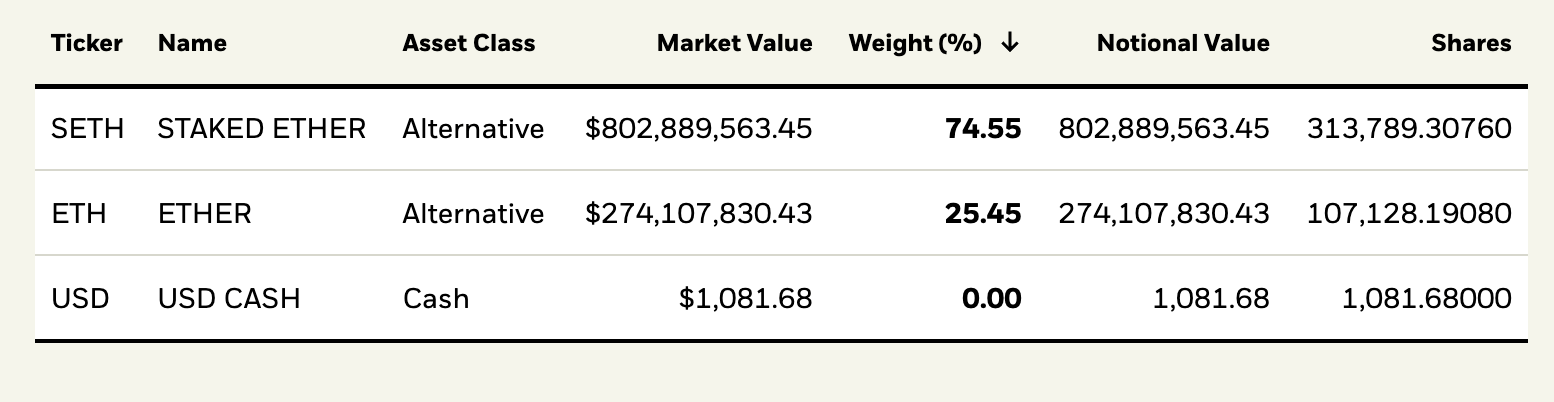
As of Sept. 11, the fund held about 313,789 staked ETH, worth $802.9 million and representing 74.55% of assets. Another 107,128 ETH, worth $274.1 million, remained unstaked. Its 30-day staking rewards rate stood at 1.52%, while average daily trading volume over 30 days was about 566,753 shares.
That yield component matters. A spot ETF gives investors exposure to the ethereum price. A staking ETF adds a return stream tied to the network itself, potentially making ether more attractive to institutions comparing crypto with income-generating assets.
ETHA Still Dominates Institutional Demand
ETHB’s growth is notable, but Blackrock’s flagship spot ether fund remains far larger.
ETHA has accumulated roughly $13 billion in net inflows and holds about $9.11 billion in net assets, making it the preferred Blackrock vehicle for institutional ethereum exposure. That gap suggests staking is supplementing rather than replacing traditional spot ETF demand.
Still, the absence of outflows from ETHB during the latest period is significant. It indicates that investors entering the product have so far behaved more like strategic allocators than short-term traders.
What This Could Mean for Ethereum’s Price
For the broader crypto market, staking ETFs create an additional source of structural ETH demand.
Fresh ETF inflows require underlying ether exposure. When much of that ETH is subsequently staked, a portion effectively moves away from readily tradable supply. If inflows continue across both ETHB and larger spot products such as ETHA, that combination could tighten liquid supply and become supportive for ethereum’s price.
The effect should not be overstated. ETHB remains much smaller than ETHA, and macro conditions, crypto risk appetite, and broader ETF flows will still dominate short-term price action.
But the longer-term signal is harder to dismiss.
Wall Street is no longer buying ethereum solely for price exposure. It is beginning to package ETH as a productive asset that can generate yield, potentially widening the institutional investor base and strengthening the investment case behind the token.



Tags in this story
About the Author