




Written by Zoltan Vardaistaff writerEdited by Bryan O’Sheastaff editor
Written by Zoltan Vardaistaff writerEdited by Bryan O’Sheastaff editorGoogle says hackers use AI agents to find and exploit software flaws
Google says attackers are using AI agents to find and exploit software flaws automatically, reducing the time organizations have to apply patches.

Google Threat Intelligence Group (GTIG) said it had, for the first time, identified attackers using AI large language model (LLM) frameworks to automate software vulnerability discovery and exploitation without step-by-step human direction.
In a report published Monday, the researchers described a tool found on an exposed staging server that compared software versions, identified potential flaws, and generated and executed exploit code.
“In the past quarter, GTIG identified threat actors using LLM frameworks to fully automate vulnerability discovery and exploitation without a human in the loop for the first time,” the researchers said.
GTIG identified an exposed staging server hosting a multi-agent vulnerability research and weaponization framework, set up to conduct continuous differential analysis comparing code before and after patch announcements on popular web applications. The model would autonomously discover and exploit software vulnerabilities.
Google warned that these automated workflows give organizations less time to apply security patches before attackers develop ways to exploit vulnerable systems.
In its September report, GTIG said it had “not yet observed threat actors deploying fully autonomous pipelines against targets in the wild.”
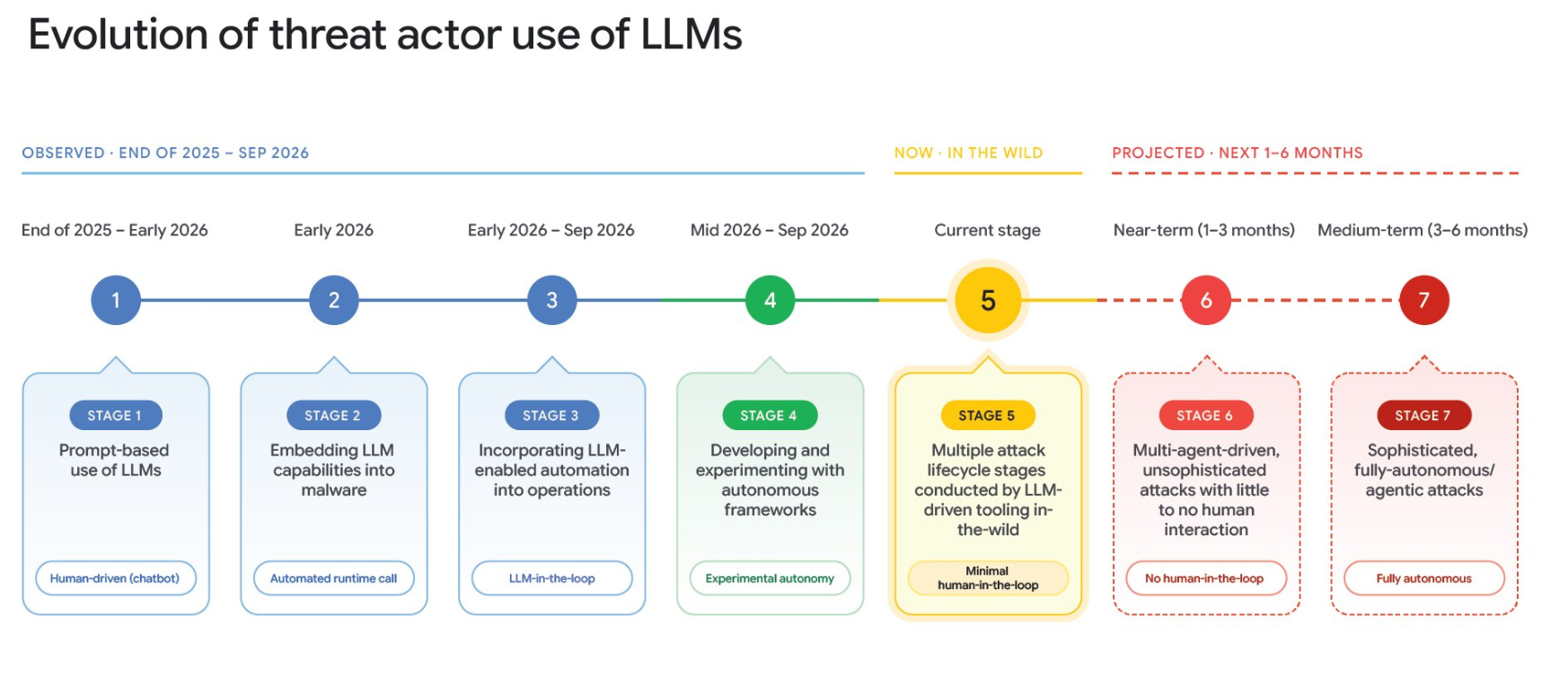
Evolution of threat actors using LLMs for exploits. Source: Google
AI agents shorten patching windows
Attackers are leveraging AI agent frameworks to automate patch reverse engineering via differential analysis and weaponizing N-day vulnerabilities, publicly known security flaws.
The report warned that LLMs are enabling attackers to scale “exploitation pipelines against internet-facing servers without human intervention.”
Vulnerability disclosures more than doubled between January and August, according to Google. The number of zero-day vulnerabilities exploited averaged eight per month in 2025 and 11 per month from January through August 2026, reaching 22 in August.
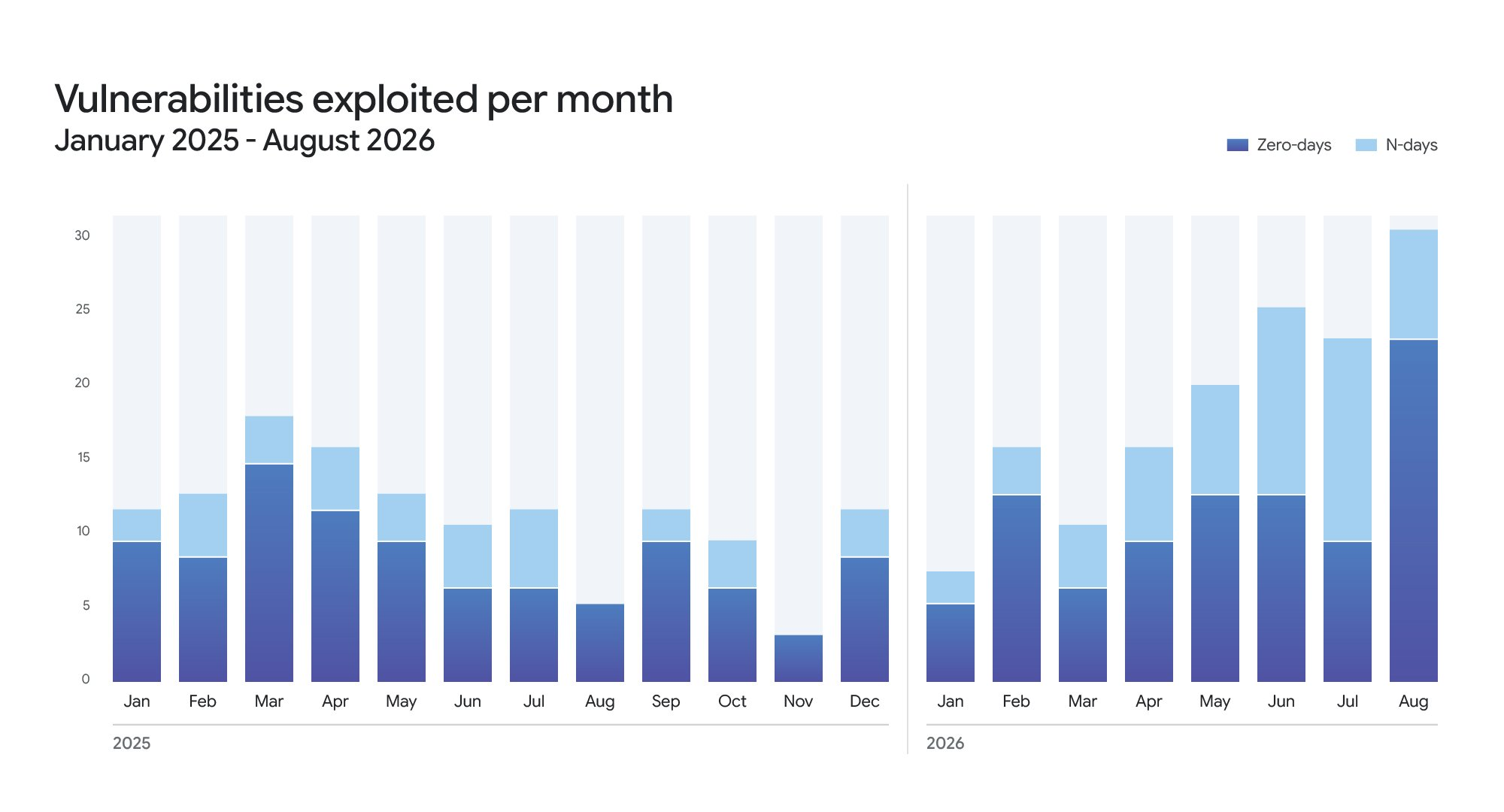
Count of vulnerabilities exploited, by n-days and zero-days, January 2025 to August 2026. Source: Google
These automated workflows also accelerate attackers’ ability to move from initial access to gaining domain administrator access. The report cited an August 2026 PaperCut campaign in which attackers achieved that level of control within minutes, according to cybersecurity firm GreyNoise.
Related: PHP flaw shows AI ‘vulnerability apocalypse’ is on schedule: Immunefi CEO
Cloudflare also reported attempts to exploit the PHP flaws against its customers in October. GTIG said that the two PHP vulnerabilities involved in the exploitation attempts were discovered using LLM analysis, as technical information published before the Oct. 21 patch enabled researchers and attackers to study vulnerabilities and attempt exploits, according to the report.
AI company Anthropic also warned that AI-assisted attacks have evolved into multi-agent operations automating most of the cyberattack cycle from discovery to exploitation and data theft, in a September report.
Anthropic described threat actors running “multi-victim campaigns using agentic AI that would previously have required teams of operators.”
Magazine: How a ‘Wrong Number’ message turned into a $3.4M crypto scam


Start your day with crypto news and analysis for a professional audience.
More on the subject



About the Author