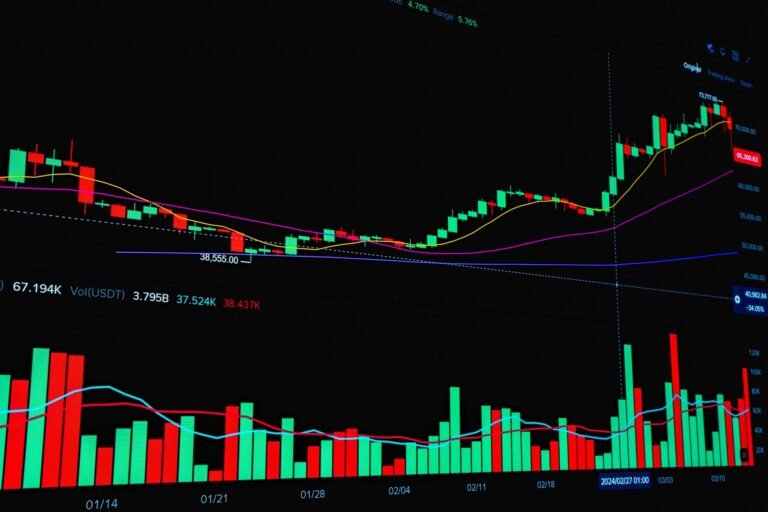
As the digital asset market experiences another significant downturn, institutional investors are rethinking their strategies around Bitcoin and other cryptocurrencies. Kevin O’Leary, a prominent figure in the financial world, has offered insights into how these institutions are responding to a 50% Bitcoin correction and the looming threat of quantum computing.
The Impact of a 50% Bitcoin Correction
The recent 50% correction in Bitcoin’s value has forced institutional investors to recalibrate their exposure to the cryptocurrency market. This sharp decline, which is not uncommon in the volatile world of digital assets, has led to significant losses and prompted a reevaluation of investment portfolios. According to O’Leary, many institutions are now rotating their capital out of Bitcoin and into more stable assets to mitigate risk.
Quantum Computing: A New Frontier
While the immediate impact of the market correction is clear, the long-term strategy of institutional investors is also being shaped by the emerging threat of quantum computing. Quantum computers, which are capable of performing complex calculations at an unprecedented speed, pose a significant risk to the security of blockchain networks. O’Leary warns that institutions are increasingly factoring in the potential impact of quantum computing on their crypto holdings, particularly in terms of encryption and security vulnerabilities.
Institutional Strategies in a Post-Correction World
In the wake of the market correction, institutions are adopting a more cautious approach to cryptocurrency investments. Many are focusing on diversification and risk management, with a particular emphasis on assets that offer more stability and less volatility. O’Leary suggests that this could lead to a greater interest in stablecoins and other less speculative digital assets. Additionally, institutions are exploring new ways to integrate blockchain technology into their existing financial systems, such as through the use of decentralized finance (DeFi) platforms and smart contracts.
Long-Term Outlook and Forward-Thinking
Despite the current challenges, O’Leary remains optimistic about the future of digital assets. He believes that the ongoing correction and the threat of quantum computing are opportunities for institutions to refine their strategies and build more resilient investment portfolios. The key, he argues, is to stay informed and adaptable, leveraging both traditional financial wisdom and cutting-edge technology to navigate the evolving landscape of digital finance.
In conclusion, the recent Bitcoin correction and the rise of quantum computing are prompting a fundamental reassessment of institutional strategies in the digital asset market. While the road ahead may be uncertain, the insights provided by Kevin O’Leary offer a valuable perspective on how institutions can navigate these challenges and position themselves for long-term success.
About the Author