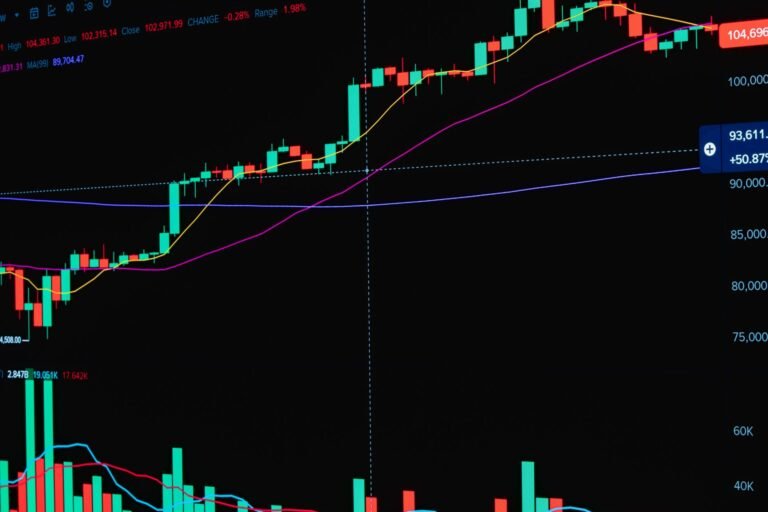
As Bitcoin climbs, so does the stock of MicroStrategy (MSTR), a company that has firmly anchored its value to the cryptocurrency. Despite its growing market capitalization, MSTR has become the most-shorted stock among those valued at over $25 billion, signaling a high-stakes game of market anticipation and risk.
With a market cap of $41.6 billion, roughly 14% of MSTR’s shares have been sold short, according to data from firms like Goldman Sachs and FactSet. This significant short interest reflects a complex interplay of factors, including the company’s unique business model and the volatile nature of Bitcoin.
A Corporate Balance Sheet Wrapped in Bitcoin
MSTR operates as a corporate balance sheet heavily weighted in Bitcoin. The company has amassed over 700,000 BTC through a combination of convertible notes, equity offerings, and cash flow from its legacy software business. This strategy turns MSTR’s equity into a leveraged instrument for Bitcoin, amplifying gains and losses.
When Bitcoin’s price rises, MSTR’s equity often expands more rapidly due to the embedded leverage. Conversely, a decline in Bitcoin can lead to significant mark-to-market losses, which MSTR currently stands at around $7 billion. These losses, however, are not immediate cash outflows but rather reflect the company’s accounting for its Bitcoin holdings.
The Short Seller’s Dilemma
The 14% short interest ratio is a clear sign of investor skepticism. Hedge funds, which hold about 3% of the equity float, and over 50 funds reporting positions, are not uniformly betting on a Bitcoin collapse. Many are engaging in basis trades, where they buy spot Bitcoin exposure, often through vehicles like the iShares Bitcoin Trust (IBIT), while shorting MSTR.
This strategy aims to capture the premium or discount between MSTR’s equity value and the underlying Bitcoin it holds, rather than predicting a catastrophic decline in Bitcoin’s price. Trading firms like Jane Street have disclosed large positions in both IBIT and MSTR, indicating paired strategies designed to remain market-neutral.
Structural Tensions and Market Dynamics
Despite the sophisticated trading strategies, structural tensions remain. A sharp rally in Bitcoin could force short sellers to cover their positions, potentially driving MSTR’s stock higher due to its thin float relative to demand. Conversely, further declines in Bitcoin could intensify scrutiny on MSTR’s leverage and refinancing risks.
MSTR’s recent acquisition of 592 BTC for roughly $39.8 million, bringing its total holdings to 717,722 BTC, underscores the company’s commitment to its Bitcoin strategy. This latest purchase, funded through the sale of 297,940 Class A shares via its at-the-market offering program, maintains MSTR’s position as the largest corporate Bitcoin treasury globally.
Looking Ahead
The future of MSTR remains closely tied to the performance of Bitcoin. While the company’s aggressive accumulation strategy has paid off during bull markets, it also exposes it to significant risks during downturns. As the cryptocurrency market continues to mature, MSTR’s unique position will be a key indicator of broader market sentiment and the evolving relationship between corporate balance sheets and digital assets.
About the Author