
Nasdaq Sets December 6 Launch for Nearly 23-Hour Trading Day
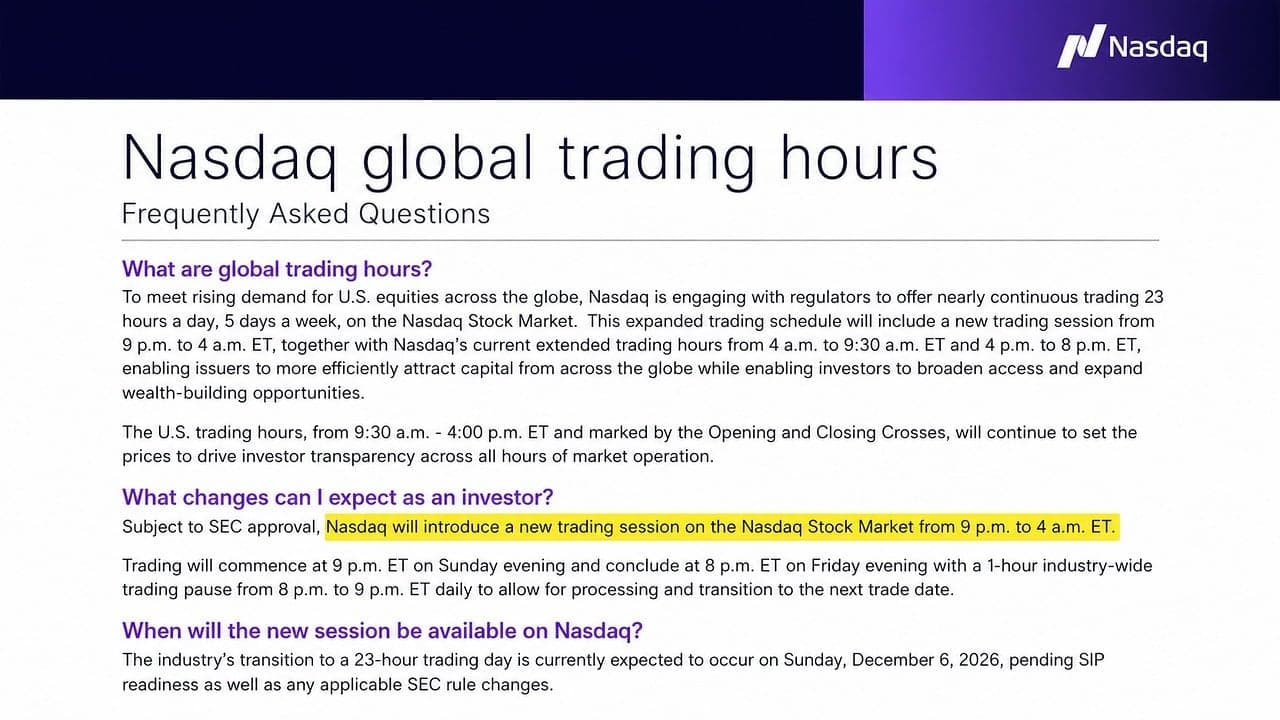
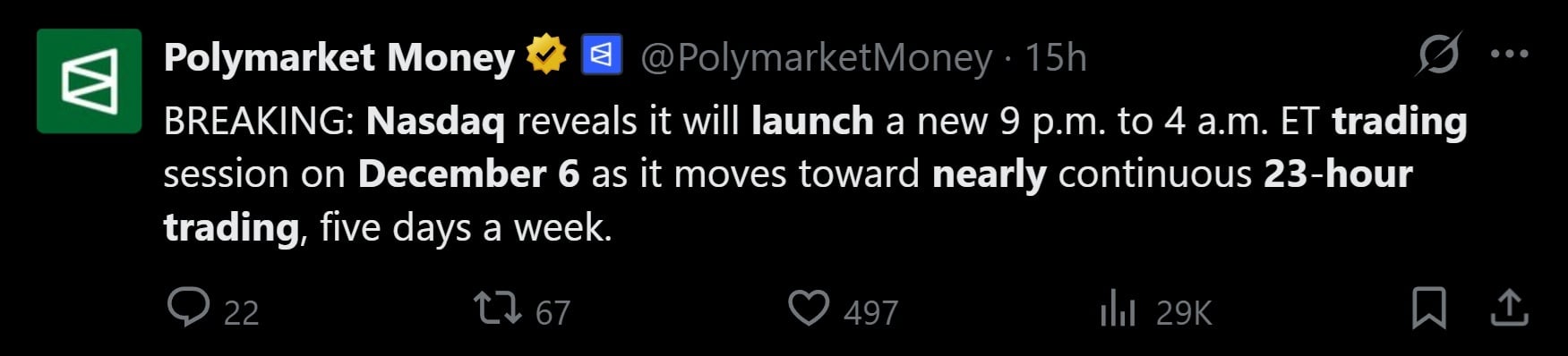
Nasdaq has confirmed Dec. 6 of this year as its target date for a nearly 23-hour trading day, adding a 9 PM to 4 AM ET overnight session five days a week in a bid to match markets, including crypto, that never fully close.

Key Takeaways
- Nasdaq targets Dec. 6, 2026 to launch a 9 PM-4 AM ET overnight session, nearing a 23-hour trading day.
- The SEC approved Nasdaq’s core 23/5 proposal in early Q2 2026, though implementation safeguards still need sign-off.
- Just 2% of Nasdaq volume trades outside standard hours today, even as CME already runs 23-hour futures.
A Nearly Round-the-Clock Trading Day
Nasdaq is preparing to extend its equities trading day to almost 23 hours, five days a week, with a new overnight session running from 9 PM to 4 AM ET set to launch Dec. 6, 2026. The extended window would run continuously from 9 PM Sunday through 8 PM Friday, broken only by a one-hour pause between 8 PM and 9 PM ET each day, set aside for processing and the transition to the next trading date.
Nasdaq’s existing regular session, 9:30 AM to 4 PM ET, would stay unchanged and continue to set the prices the rest of the market treats as authoritative.
The exchange operator has branded the initiative “Always-On” with Nasdaq Chair and CEO Adena Friedman telling investors on the company’s April earnings call that the exchange is excited to be leading the transition to a new operating model.
Friedman also said the exchange is making sure that consolidated tape and market data will be available by then, producing what she called a more “lit market environment 23/5”.
Regulatory Sign-off Still Pending
Friedman’s April comments come after the Securities and Exchange Commission’s approval of the core 23/5 trading proposal early in the second quarter of 2026. But the December 6 timeline still depends on two more pieces falling into place, i.e. additional SEC approval and confirmation that the securities information processor (the shared infrastructure that consolidates trade data across exchanges) is ready to operate through the overnight window.
Nasdaq also plans new safeguards for the overnight session, including static price bands that would automatically reject orders placed outside specified limits, another element still awaiting regulatory sign-off. Traders who want to participate overnight will need new order entry ports, and some order types will not be available during the extended hours.
Law firm Alston & Bird flagged planning risks for listed companies in a mid-May advisory, telling clients to prepare for thinner liquidity and higher volatility during night trading. The firm also pointed to condensed corporate action processing windows, a byproduct of the reduced one-hour maintenance period between day and night sessions, and urged companies to reconsider the timing of earnings releases and other material announcements given the market’s new, longer exposure to overnight and global trading patterns.
Catching up to Markets That Never Sleep
Nasdaq’s exchange currently runs a 4 AM to 8 PM ET session, and only about 2% of total trading volume happens outside that window. Still, rival exchanges are racing to extend their own hours. The New York Stock Exchange has floated a 24-hour trading model of its own, an idea born partly from watching how crypto markets, which never close, reshaped investor expectations about when a market should be open.
Derivatives markets have already moved faster than equities, and CME Group’s single-stock futures on more than 50 top U.S. stocks trade for roughly 23 hours a day, five days a week, on its Globex platform, running alongside CME’s bitcoin and ether futures and options, which trade 24/7.
For an exchange operator like Nasdaq, matching that cadence for stocks themselves, even short of full weekend trading, is as much a competitive response as a technical one, since capital increasingly treats round-the-clock access as the default rather than the exception.


About the Author