




Spain Moves to Freeze Crypto Accounts Without Need for Court Approval
A recently published reform to Spain’s anti-money laundering and terrorism financing prevention law allows the national financial intelligence agency to issue temporary blocks on crypto transactions for up to 10 days without a judge’s involvement.

Key Takeaways
- Spain’s new decree lets SEPBLAC freeze suspect crypto accounts and transactions without a court order.
- Temporary blocks last up to 10 days for transactions and five days for accounts to probe illicit fund links.
- Set for January 2027, the EU-aligned rule accelerates Spain’s crypto oversight following Germany’s lead.
Spain Issues Decree to Allow Authorities to Freeze Crypto Accounts Without Judicial Involvement
Spain’s government has issued a new decree seeking to tighten control over fraud-linked funds, allowing authorities to take swift action on cases where illicit funds, even in the form of crypto, are leveraged.
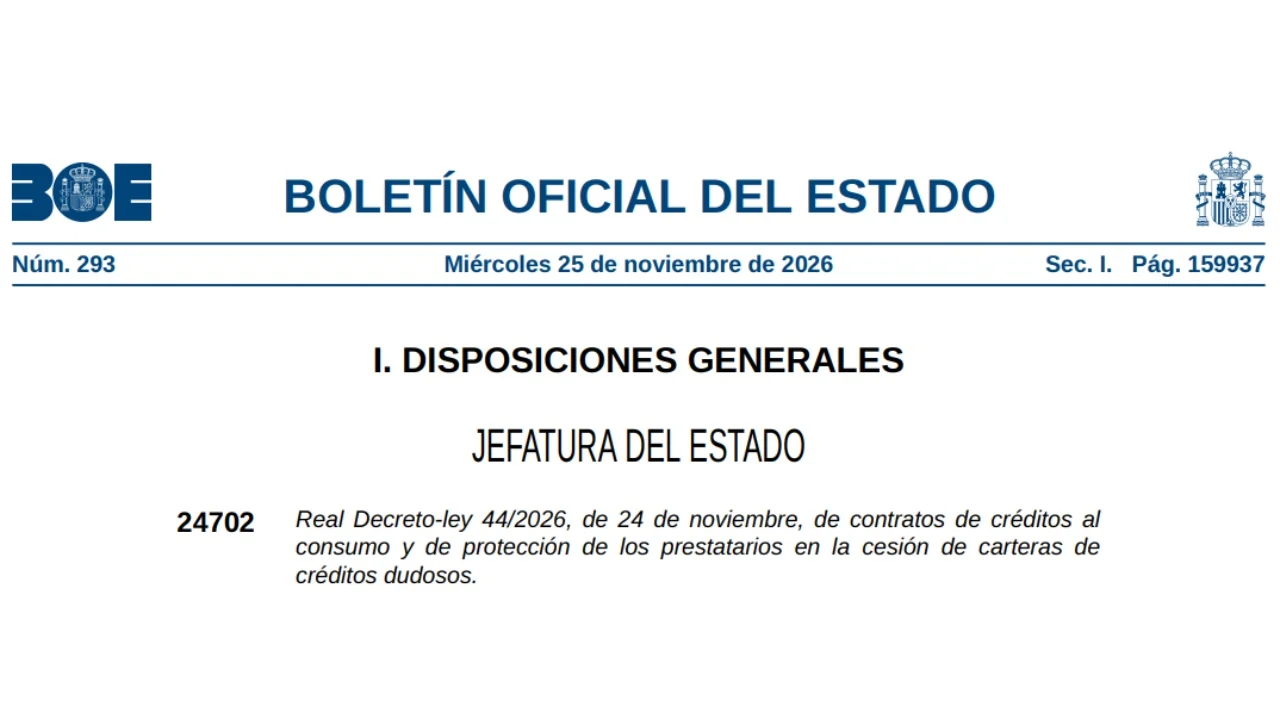
On Wednesday, Spain’s executive issued Royal Decree-Law 44/2026, which targets consumer lending agreements and borrowers’ protection in the assignment of portfolios of non-performing loans.
The decree includes reforms to current anti-money laundering and terrorism financing prevention law, extending the powers of Spain’s financial intelligence unit in accordance with internationally proposed Financial Action Task Force (FATF) standards. It implements the EU’s 2024/1640 directive, which calls on Member States to give powers to their financial intelligence units to act immediately to suspend or withhold consent to a transaction or an account considered linked to illicit activity.
Article 46 bis, which deals with the implementation of this measure, states that the Executive Service of the Commission for the Prevention of Money Laundering and Monetary Offenses (SEPBLAC), Spain’s financial watchdog, will be able to suspend or freeze a crypto transaction or an account without a court order when signs link these to money laundering and terrorism financing activities.
The measure aims to “safeguard the funds, conduct their analyses, assess whether the suspicion is confirmed, and—if so—forward the information to the competent authorities so that they may take appropriate measures.”
The temporary blocks can extend to up to 10 days for transactions and up to five days for accounts, after which they will be lifted if no link to illicit funds is proven.
These restrictions can also be imposed at the request of law enforcement agencies, as well as upon the request of the Financial Intelligence Unit of another European Union Member State or a third state.
Spain’s move marks an acceleration of the government’s crypto-vigilance policies, after the full implementation of the Market in Crypto Assets (MiCA) framework.
These provisions will come into effect in January 2027, subject to Parliament’s approval, and follow a similar move by Germany’s Bundestag, which approved seizing cryptocurrency assets whose lawful origin is unproven for up to 180 days without a criminal investigation.
In that case, the owner of these digital assets needs to prove the lawful acquisition of “significant amounts,” meaning crypto holdings worth over 100,000 euros (about $109,300), during the holding period.
Spanish regulator National Securities Market Commission have authorized cryptocurrency platform Venga to operate under the European Union’s new Markets in…
Read Now: EU’s MiCA Deadline Reshapes Crypto Market as Spain Approves Venga


About the author
WRITTEN BYSergio Goschenko
Sergio is a cryptocurrency journalist based in Venezuela with 2,000+ articles published, cited in dozens of papers and reports.
About the Author