Zcash Mining Highly Profitable: Grayscale Says Rewards Beat Bitcoin 2x
Zcash mining rewards are roughly twice Bitcoin’s per machine and four times higher per unit of electricity, Grayscale estimates. Strong token prices are encouraging more mining activity, with the firm linking that expansion to stronger network security.

Key Takeaways
- Grayscale estimates Zcash rewards at twice Bitcoin’s daily rewards per rig.
- Zcash mining activity has increased more than 2.5 times this year.
- Electricity, equipment, and operating costs shape actual miner profits.
Grayscale Details Zcash’s Mining Advantage
Zcash miners can earn roughly twice the daily rewards per machine compared with Bitcoin miners under Grayscale’s latest estimates. Grayscale Head of Research Zach Pandl outlined the comparison in a Sept. 11 analysis, linking stronger token prices to higher mining rewards. The crypto asset manager estimates that Zcash’s advantage reaches roughly four times Bitcoin’s rewards per megawatt-hour of electricity.
Pandl said:
“At current valuations, Zcash mining can be highly profitable. This is encouraging more mining activity which in turn supports network security.”
Both networks use proof-of-work mining, a process in which specialized computers compete to earn rewards and add blocks of transactions. Grayscale argues that higher Zcash prices encourage more computing power to join the network, strengthening its security. The firm suggests that this improvement may help sustain higher prices, describing a potential reinforcing relationship. Zcash mining activity has grown to more than 2.5 times its level at the start of the year, according to Grayscale.
Electricity and Equipment Shape Mining Returns
Grayscale’s comparison uses the Bitmain S23 Hydro for Bitcoin and the Bitmain Z15 Pro for Zcash. Its calculations assume electricity at $0.05 per kilowatt-hour, full uptime, and zero transaction fees, using data as of Sept. 9. Pool fees, cooling, other operating expenses, and equipment costs or depreciation are excluded, making those expenses important determinants of an operator’s eventual profit.
The two machines cannot switch between Bitcoin and Zcash mining, limiting how operators can respond to changing rewards. Zcash uses Equihash-based mining, while its documentation separates mining economics into revenue, operating expenses, and capital expenditure. Rising network difficulty can reduce the revenue generated by a given machine as competition for rewards increases.
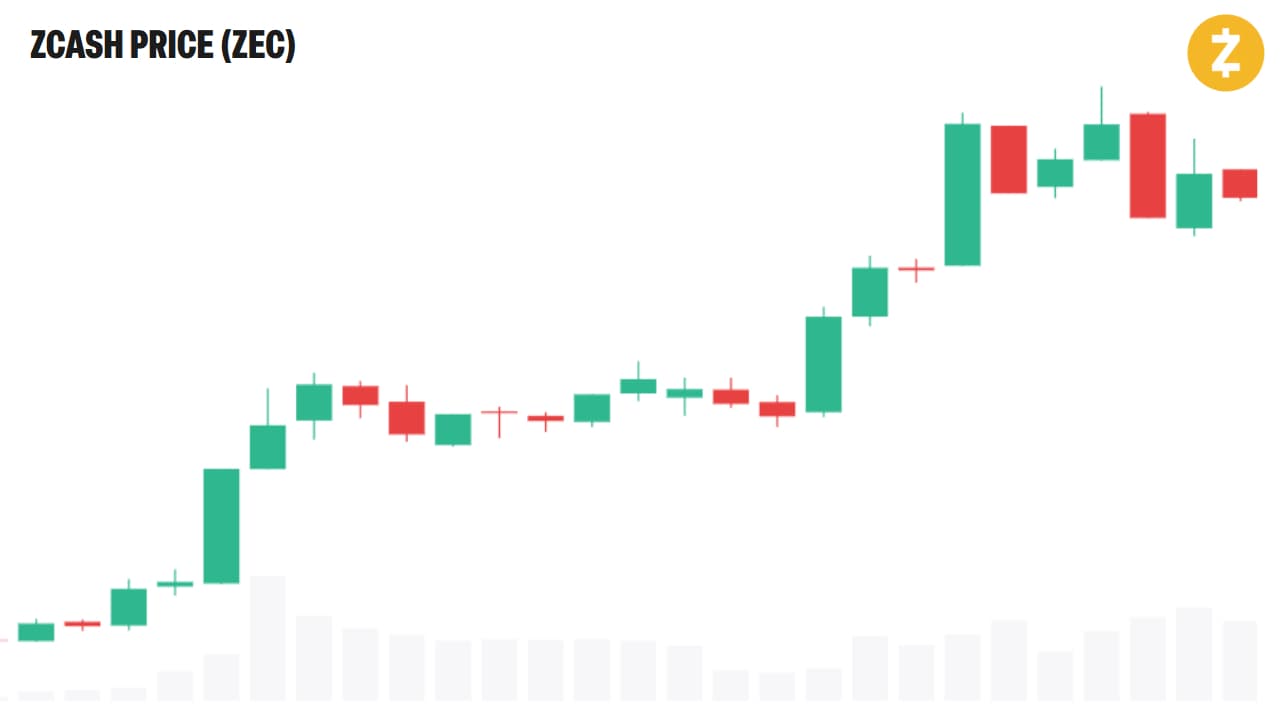
The improvement in Zcash mining economics was already evident as the token approached $1,000 earlier this month. On Sept. 3, ZEC reached an intraday high of $979, while mining power remained near its record. Equipment profitability estimates from that date used electricity at $0.10 per kilowatt-hour, twice the rate assumed in Grayscale’s analysis. ZEC traded at $1,123.25 at press time.
Bitcoin Retains the Larger Reward Pool
Bitcoin still distributes substantially more money across its mining network despite Zcash’s advantage in Grayscale’s machine-level comparison. The firm puts aggregate Bitcoin miner rewards at approximately $35 million daily, compared with roughly $2 million for Zcash. The difference separates the overall size of each network’s reward pool from the estimated earnings of individual machines.
Comparisons with other computing businesses have also highlighted the changing value of electricity used for Zcash mining. An analysis from The Energy Mag, republished Aug. 25, estimated Z15 Pro gross revenue at $727.30 per megawatt-hour, against a high-performance computing benchmark of $222.73. Those figures describe revenue under that analysis’s assumptions, rather than an operator’s final profit.
Grayscale’s mining assessment also follows growth in its own Zcash investment product, which surpassed $500 million in assets by Sept. 8 after listing on NYSE Arca on Aug. 25. The fund recorded more than $70 million in cumulative outside inflows, alongside a roughly $100 million in-kind investment from a Digital Currency Group affiliate.


Tags in this story
About the Author