Argentine Judge Orders Urgent Freeze of Crypto Wallets Tied to Controversial Libra Token
The measure, ordered by Federal Judge Marcelo Martinez, seeks to ascertain the identities of the owners of 25 wallets that moved the funds left after the launch of Libra, and the freezing of the funds in these wallets. At least 10 transactions passed through centralized exchanges, such as Binance, that exert KYC controls.

Key Takeaways
- Judge Martinez froze Libra wallets after police traced the funds, exposing the networks used to hide them.
- Wallets moved millions through crypto exchanges, allowing authorities to use KYC rules to identify users.
- A Libra Trust now manages the remaining funds, planning to distribute them as grants to local companies.
Federal Judge Orders Identification of Libra Wallet’s Owners
The Libra case, which investigates the launch and subsequent movement of the funds allocated through the controversial token sales, has reached new developments in Argentina.
According to a document reviewed by local media, Federal Judge Marcelo Martinez ordered the identification and freezing of a set of wallets linked to Libra after receiving a report from the Federal Police’s Cybercrime Technical Department that reconstructed the trail of these through several crypto networks starting in May.
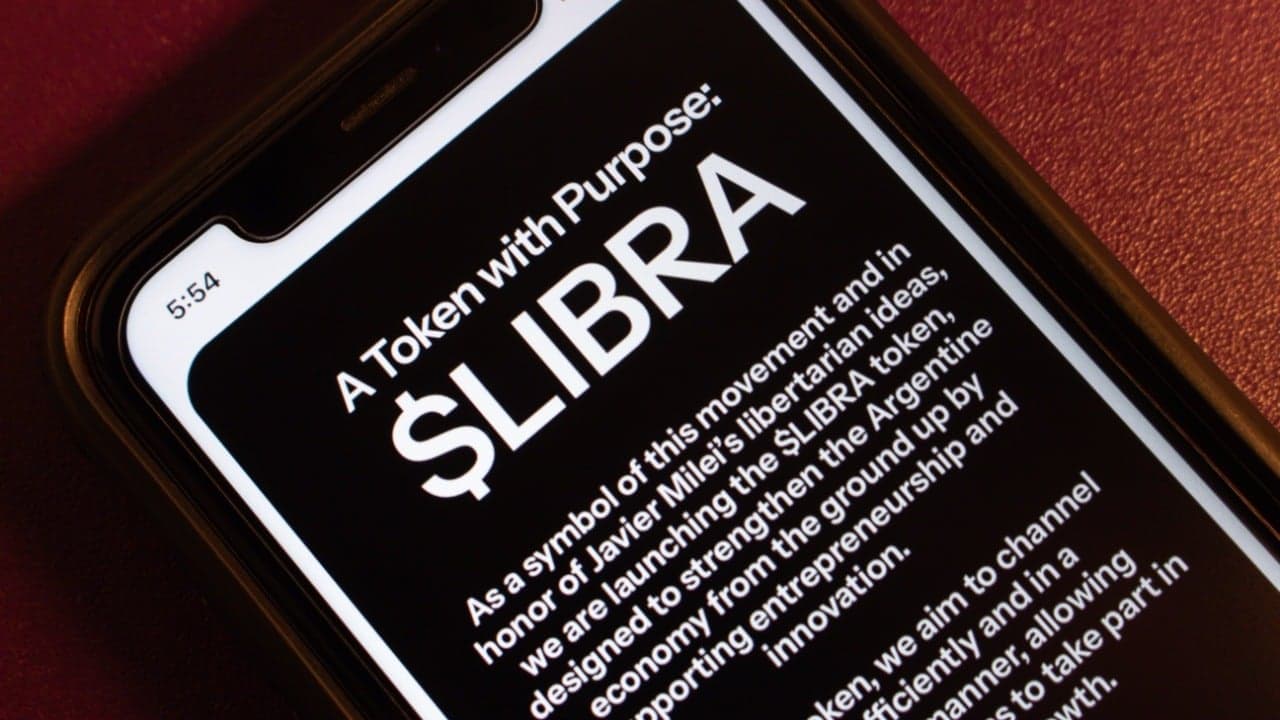
The move scrutinized eight wallets labeled as “Libra team,” which had direct involvement in the token launch after Argentina’s President Javier Milei promoted it on social media. The report recorded the moves of these wallets, with four consolidating nearly $57 million into an address that was blocked and released by the United States District Court for the Southern District of New York, after it determined that the funds were no longer at risk of dissipation.
The referenced wallet allegedly mixed funds using several other wallets. On May 10, there was a massive fund movement that funneled nearly 500K through an interoperability protocol into a Tron address. This wallet also tried to obfuscate its transactions, but out of 17 movements executed, at least 10 passed through Binance. Similarly, eight wallets are linked to Bybit, two to OKX, and two to Bitfinex.
This would, in theory, help identify the users linked to these $8.2 million, as most centralized exchanges comply with know-your-customer (KYC) requirements. Nonetheless, others might not be identifiable, as some institutions don’t require customer identification for these operations.
The remaining funds are now managed by a so-called Libra Trust, which aims to distribute them to Argentine companies through grants before November, with 71 applications already pending approval to receive these benefits.


About the Author